Technical Analysis

57articles
Why NVIDIA CEO Jensen Huang Is Wrong About Huawei's τ Law: Logic Folding Is Not TSMC's 3D Packaging

Why NVIDIA CEO Jensen Huang Is Wrong About Huawei's τ Law: Logic Folding Is Not TSMC's 3D Packaging

Jensen Huang equated Huawei's τ Law with TSMC's 3D packaging and declared it not a threat—a category error. Logic folding is front-end true-3D redesign; 3D packaging is back-end pseudo-3D integration with 500× fewer inter-layer connections. At 30-40% cost, 7nm + logic folding approaches 3nm density, fundamentally reshaping mid-market demand curves.

NVIDIA Computex 2026: Vera CPU Ships, N1X Laptop SoC Debuts, $6.5B Silicon Photonics — Three Strategic Fronts Converge

NVIDIA在Computex 2026前夜三线并发:Vera CPU首批交付AI实验室,Phoronix基准超越EPYC 9575F达10%;N1X笔记本SoC获微软/Arm联合背书切入AI PC赛道;三个月豪掷65亿美元布局硅光子学,押注CPO渗透拐点。三线本质是AI全栈基础设施的同步落子。

Google I/O 2026: Beneath the Agentic Narrative, Seven Layers of Lock-In

Google I/O 2026: Beneath the Agentic Narrative, Seven Layers of Lock-In

Google I/O 2026's theme is the "Agent Era," but the underlying logic is not making Agents more free—it's locking everything more firmly into the Google ecosystem. This article dissects seven dimensions of lock-in: cost curve, enterprise security penetration, SEO ecosystem termination, cloud computing atomic unit redefinition, optical interconnect infrastructure, Agent financial infrastructure, and content authenticity definition rights. Google is using the Agent narrative to package a systematic ecosystem enclosure movement.

Gemini Spark Enterprise Security Impact: How Cloud-Resident Agents End the Corporate Network Perimeter

Gemini Spark Enterprise Security Impact: How Cloud-Resident Agents End the Corporate Network Perimeter

Gemini Spark is the terminator of the enterprise network perimeter. When employees' personal Agents operate 24/7 across personal, enterprise, and third-party systems autonomously, traditional endpoint security, network perimeter, and DLP all fail. This is not "yet another AI tool" but a systemic risk of "Agent penetration into the enterprise"—the enterprise security model must evolve from the "human user + enterprise device" era to the "Agent-First" era.

Antigravity 2.0: Google's Ambition to Become the Operating System of the Agent Era

Antigravity 2.0: Google's Ambition to Become the Operating System of the Agent Era

Google elevated its development platform from an "AI-assisted coding tool" to an "Agent operating system" through Antigravity 2.0. When enterprise Agents are built and run on Antigravity, the injection point for security policies migrates from the network layer to the platform layer. Platform-native security capabilities become the core competitive advantage, while traditional network perimeter security gives way to platform-intrinsic Agent governance capabilities.

Google Gemini Enterprise Agent Platform Security Architecture: The Paradigm Shift from Model Marketplace to Agent OS

Google Gemini Enterprise Agent Platform Security Architecture: The Paradigm Shift from Model Marketplace to Agent OS

Google completed the paradigm shift from "model marketplace" to "Agent operating system" through the Gemini Enterprise Agent Platform at I/O 2026. Its security philosophy is Platform-Native Security—all Agents must run within Google Cloud boundaries, with security built into the control plane rather than bolted on. Five security components are dissected: Agent Identity, Agent Registry, Agent Gateway, Managed Agents, and CodeMender. Deep integration delivers management efficiency at the cost of lock-in effects and absence of cross-platform governance.

Cisco Security Narrative Dilemma: Why 5,000 New Customers Cannot Drive Double-Digit Growth

Cisco Security Narrative Dilemma: Why 5,000 New Customers Cannot Drive Double-Digit Growth

Cisco's FY26 Q3 flat security revenue contradicts 5,000 net new customers. The attach-rate logic rather than first-choice platform logic defines the growth ceiling of its security business. Investors price Cisco as an AI network infrastructure provider, not a security company. The Splunk integration inflection point is in FY27, but security will likely remain a supporting role.

Apple MIE Bypassed by AI and PANW's 75 CVEs in a Month: The Capability Leap and Reversal Window in AI Vulnerability Discovery

Anthropic Mythos驱动AI漏洞发现进入工业化阶段。Calif团队3人+Mythos用5天攻破苹果5年打造的MIE硬件安全防线;PANW用Mythos/Claude Opus 4.7/GPT-5.5-Cyber单月发现75个CVE(7倍增长);Mozilla Firefox单月423个修复;Microsoft MDASH恢复96%历史漏洞。PANW警告攻守逆转窗口仅3-5个月。

AI Agent Security Trio: Scenario-Driven Protection Gap Analysis — Cisco vs PANW vs Fortinet

AI Agent Security Trio: Scenario-Driven Protection Gap Analysis — Cisco vs PANW vs Fortinet

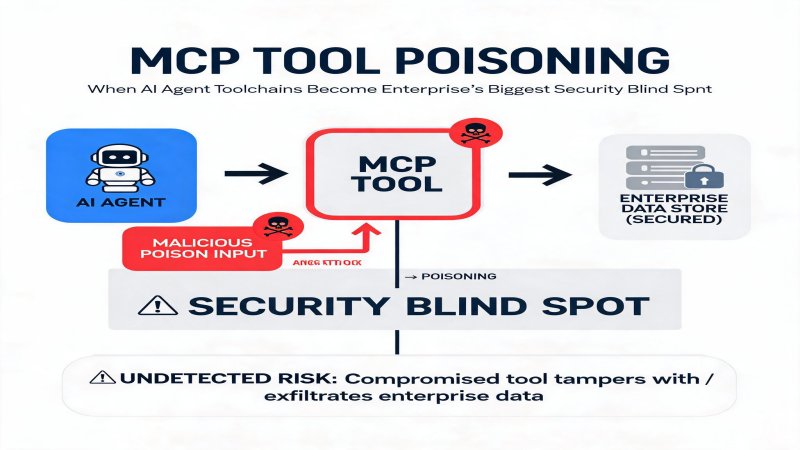
A scenario-driven comparison of AI Agent security across Cisco, PANW, and Fortinet reveals shared blind spots in coding agent confused deputy attacks and A2A protocol security. MCP toolchain is the 12-month battleground. No single vendor achieves full internal-external coverage.

Microsoft MDASH: Engineering-Grade Vulnerability Discovery via Multi-Model Agent Orchestration

Microsoft MDASH: Engineering-Grade Vulnerability Discovery via Multi-Model Agent Orchestration

Microsoft unveiled MDASH during May 2026 Patch Tuesday—an end-to-end vulnerability discovery system orchestrating 100+ specialized AI agents. Through a five-stage pipeline, it automates attack surface construction to proof-of-exploit generation. Private evaluations show 21/21 findings with zero false positives on StorageDrive, 96% recall on clfs.sys vulnerabilities, and 100% recall on tcpip.sys. CyberGym benchmark scored 88.45%. Among 120 vulnerabilities in May Patch Tuesday, 16 were discovered by MDASH including 4 Critical RCEs.

Agent Mass Production Gap: From Data Analysis to Vendor Positioning, Security Infrastructure Determines Who Lands

Agent Mass Production Gap: From Data Analysis to Vendor Positioning, Security Infrastructure Determines Who Lands

2026 Q2 shows 78% Agent pilot but only 14% scale deployment. Governance infrastructure deficit is the primary scale failure cause. Five core vendors compete across five security layers: Microsoft Entra Agent ID and Cisco Duo IAM lead entry layer; Microsoft MDASH, Cisco AI Defense, OpenAI Codex Security lead assessment; NVIDIA OpenShell dominates guardrails; Palo Alto Cortex Cloud 2.0 innovates detection; OpenAI Daybreak uniquely pursues model layer. Security infrastructure determines who lands—complete identity remediation, supplement runtime guardrails, establish assessment loops.

Agent Mass Production Gap: Data Analysis to Vendor Positioning

Agent Mass Production Gap: Data Analysis to Vendor Positioning

2026 Q2 data reveals enterprise Agent adoption shows 'universal pilots, scarce mass production': 78% have pilots, only 14% at scale. Core finding: governance infrastructure deficit is more critical than model capability for scaling failures. Security risks severe: 97% of security leaders expect serious Agent security incidents. Four major vendors positioning governance across identity, access, monitoring, guardrails, and evaluation layers. 2026 is the year of Agent governance infrastructure. Gartner predicts 40%+ projects may be cancelled by end of 2027.