Filter by Vendor

Vendor Strategy

Deep Dive: Palo Alto Networks' Strategy for AI-Powered Attacks and Network Device Security Architecture

Deep Dive: Palo Alto Networks' Strategy for AI-Powered Attacks and Network Device Security Architecture

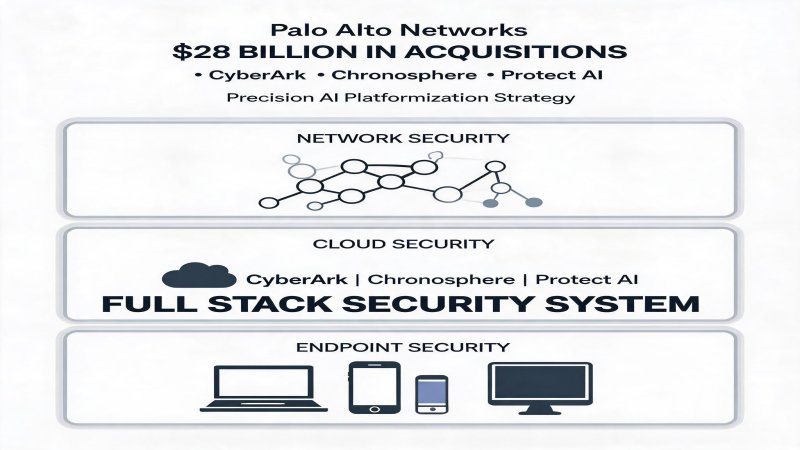
Through $28 billion in acquisitions (CyberArk/Chronosphere/Protect AI) and its "Precision AI + Platformization" strategy, Palo Alto Networks builds a full-stack security system covering network, cloud, endpoint, identity, and AI with Prisma AIRS (only full AI lifecycle coverage), PAN-OS 12.1 Orion (industry's first quantum-ready NGFW), and Device Security (2000+ attribute dimensions). Q4 2025 NGS ARR was $5.6 billion (up 32% YoY), with over $2 billion in Google Cloud partnership revenue.
Deep Dive: Fortinet's Strategy for AI-Powered Attacks and Network Device Security Architecture

Deep Dive: Fortinet's Strategy for AI-Powered Attacks and Network Device Security Architecture

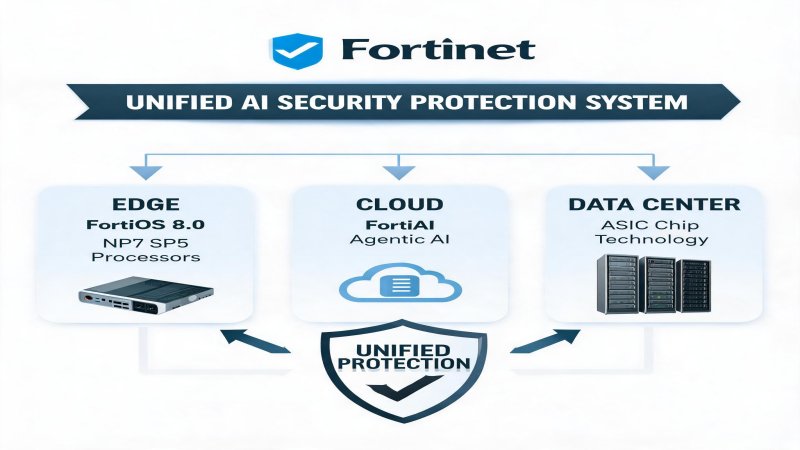
Fortinet builds a unified AI security protection system covering edges, cloud, and data centers through the trinity of FortiOS 8.0 unified OS (NP7/SP5 processors), FortiAI Agentic AI, and ASIC chip technology with cumulative $1B+ investment. FY2025 revenue was $6.8 billion (up 14% YoY), free cash flow $2.21 billion, operating margin 35%.

Deep Dive: HPE's Strategy for AI-Powered Attacks and Network Device Security Architecture

Deep Dive: HPE's Strategy for AI-Powered Attacks and Network Device Security Architecture

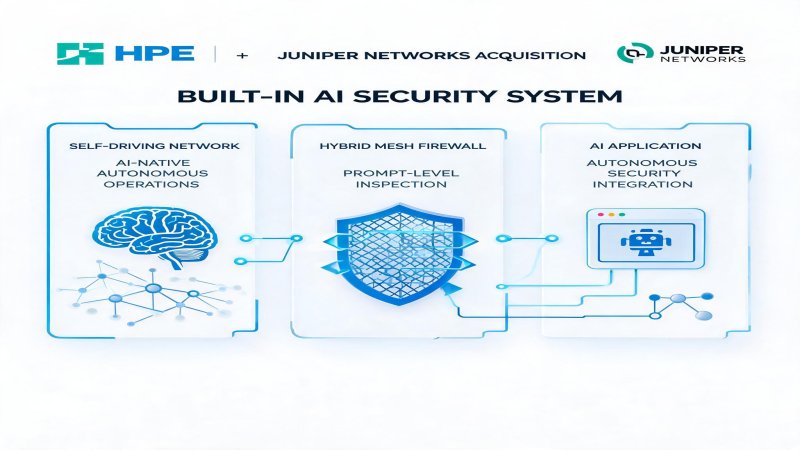
Through the Juniper Networks acquisition, HPE builds a "built-in security" system using Self-Driving Network (AI-native autonomous operations), Hybrid Mesh Firewall (prompt-level inspection, AI application visibility), and SRX400 series (1.4 Tbps Trio ASIC) to achieve AI security protection from core to edge. Q2 FY2026 networking revenue was $2.7 billion (up 151.5% YoY), with full-year target approximately $11 billion.

Deep Dive: Cisco's Strategy for AI-Powered Attacks and Network Device Security Architecture

Deep Dive: Cisco's Strategy for AI-Powered Attacks and Network Device Security Architecture

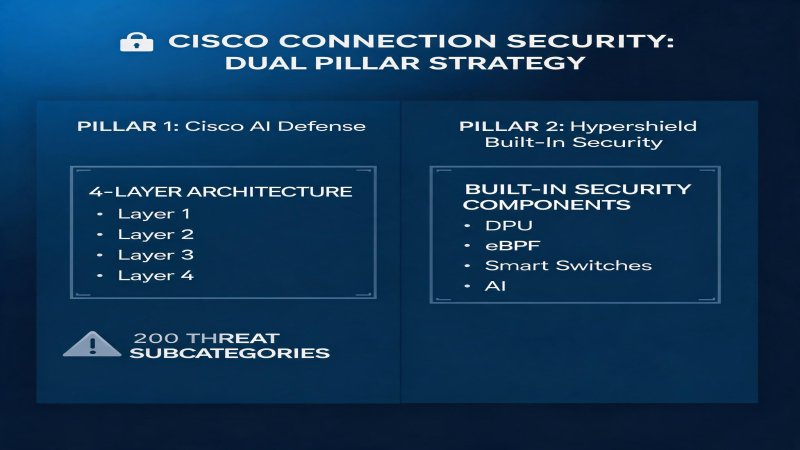
Cisco's "Connection + Security" dual-pillar strategy centers on Cisco AI Defense's four-layer architecture (200+ threat subcategories), Hypershield's built-in security paradigm (DPU+eBPF+smart switches), and AI-native network devices (post-quantum cryptography, Silicon One G200), building a full-stack AI security system from infrastructure to agents. FY2025 security revenue share reached 19.5% (up 59% YoY), with Q1 FY2026 AI infrastructure orders at $1.3 billion.

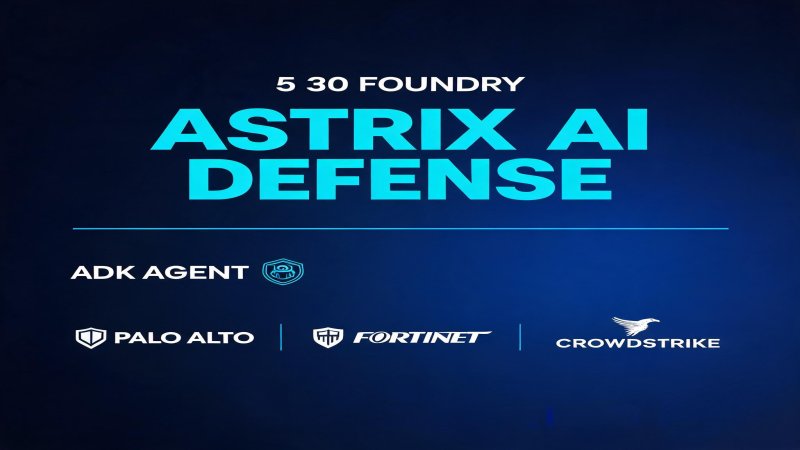
Deconstructing Cisco's Agent Security Ambition: Open Foundry for Rule-Setting, Astrix for Non-Human Identity Lock-in, Network Layer as Agent Traffic Gateway

Deconstructing Cisco's Agent Security Ambition: Open Foundry for Rule-Setting, Astrix for Non-Human Identity Lock-in, Network Layer as Agent Traffic Gateway

Cisco's 30+ signals in May form a synchronized four-layer architecture: Definition (Foundry), Control (Astrix), Detection (AI Defense+ADK), Infrastructure (Network). Cisco competes not just in products but for Agent security standard-setting authority and network traffic control - structural advantages competitors cannot replicate.

TSMC Q1 Confirms AI Compute Arms Race Has Entered the Chip Inflation Era

TSMC Q1 Confirms AI Compute Arms Race Has Entered the Chip Inflation Era

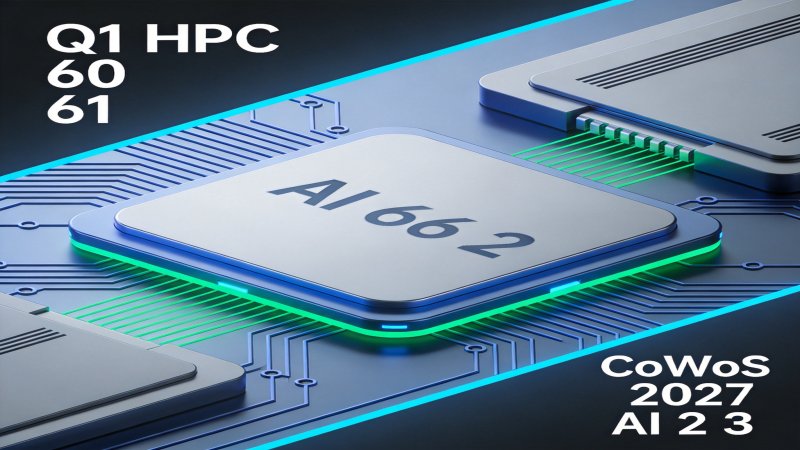
TSMC Q1 earnings show HPC crossed 60% revenue share for the first time, reaching 61%, marking a structural shift in AI compute demand. Gross margin hit 66.2% historical high, while CoWoS advanced packaging capacity remains tight through 2027. Supply-demand imbalance drives chip inflation - AI chip unit costs unlikely to decline in 2-3 years, and the window to lock long-term compute contracts is narrowing.

Meta Muse Spark: A Strategic Pivot from Open-Source to Proprietary Monetization

Meta Muse Spark: A Strategic Pivot from Open-Source to Proprietary Monetization

Meta halts open-source development of its AIGC tool Muse Spark, shifting fully to a proprietary, paid service model. This strategic pivot aims to monetize proven tools, cover high AI costs, and improve margins, marking a move from ecosystem building to commercial harvesting. It signals a potential industry trend of keeping only foundational layers open-source, impacting developers, enterprises, and investors.

Cisco Launches Zero Trust Security Architecture for AI Agents

Cisco Launches Zero Trust Security Architecture for AI Agents

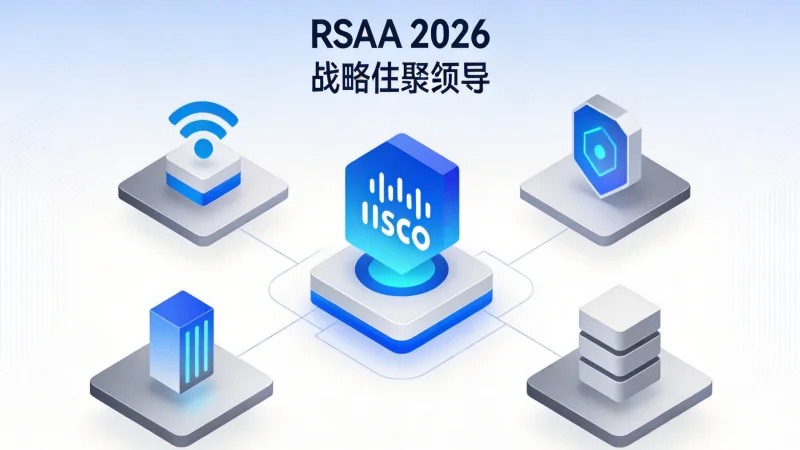
At RSA 2026, Cisco took a strategic lead by unveiling a Zero Trust architecture for AI Agents, with its core strategy centered on defining AI Agents as a new security principal governed alongside human employees—securing a pivotal position in enterprise security infrastructure for the AI era. The solution systematically addresses critical challenges—asset invisibility, lack of identity, and runtime security—through innovations including Agent IAM, task-level Zero Trust, Agent traffic governance, and Agentic SOC. This launch marks Cisco’s strategic shift from a user-centric to an agent-centric security paradigm.