Weekly Industry Insights

Jun 22 - Jun 28 Weekly Insight

This week saw diversified developments in AI infrastructure, with vendors competing for control through custom chips, liquid cooling, and vertical integration, while ARM server market share exceeded 45%, accelerating the shift to AI-native architectures.

Read More →

Jun 15 - Jun 21 Weekly Insight

This week shows dual trends of hardware lock-in and software ecosystem restructuring in AI infrastructure, alongside rising global AI model export control risks.

Read More →

Jun 8 - Jun 14 Weekly Insight

This week's core trend shows AI infrastructure vendors strengthening control through technical lock-in and ecosystem integration, with security automation and AI agent governance emerging as new focal points.

Read More →

All Insights

86articles
AI Chip Supply Chain Reshuffle and Memory Price Surge: Samsung's 2nm Foundry Rise and Industry Transformation

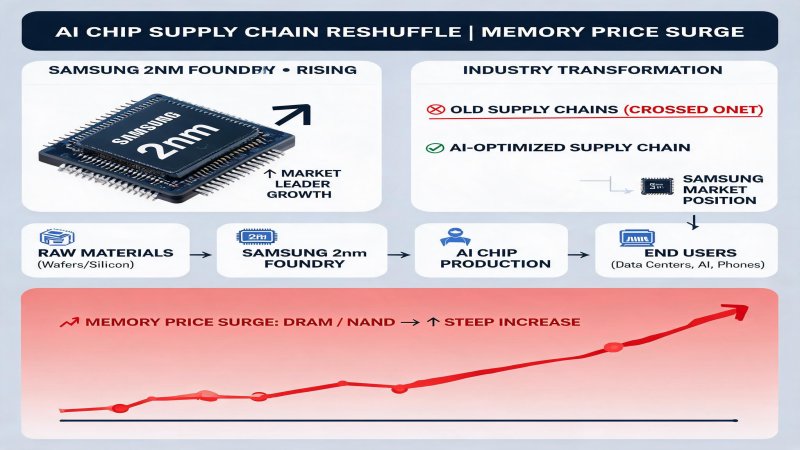
AI Chip Supply Chain Reshuffle and Memory Price Surge: Samsung's 2nm Foundry Rise and Industry Transformation

On July 3, 2026, Samsung Electronics announced up to 20% DRAM price hikes for Q3, with 4nm capacity sold out and backlog orders approaching 50 trillion KRW. Meta and Anthropic have chosen Samsung's 2nm process for custom AI chips. Intel and AMD also raised CPU/GPU prices. These events signal AI demand is fundamentally reshaping the global semiconductor supply chain, marking a strategic turning point for Samsung's foundry business.
Geopolitical Tech Sovereignty Battle: ASML Export Curbs, TSMC's US Expansion, and Cloud Sovereignty Clashes

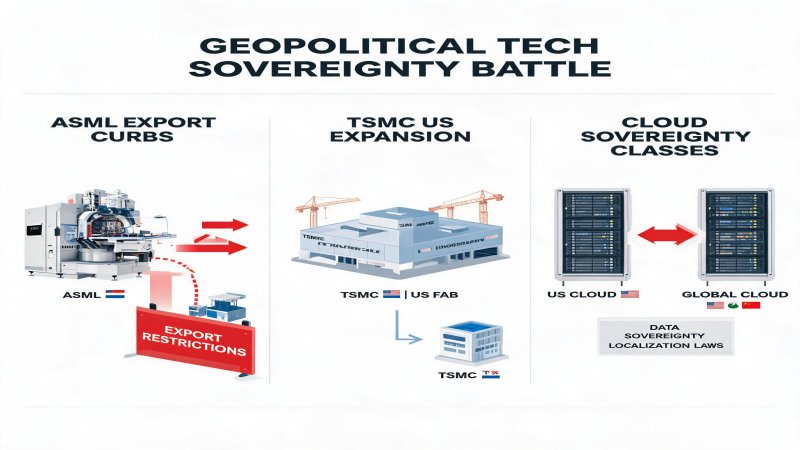
Geopolitical Tech Sovereignty Battle: ASML Export Curbs, TSMC's US Expansion, and Cloud Sovereignty Clashes

On July 3-4, 2026, US lawmakers proposed new restrictions on chip manufacturing equipment exports to China, sending ASML shares down 2.89% with potential 19% China revenue loss. Trump announced TSMC's US fab would double in scale, with Taiwan approving $20 billion in additional investment. Microsoft cut 200-400 Azure jobs in China. Huawei maintained its lead in China's firewall market. Together, these events paint a picture of accelerating tech sovereignty battles and supply chain fragmentation.

AI Regulatory Framework Takes Shape and Cybersecurity Industry Booms: Policy, Technology, and Market Resonance

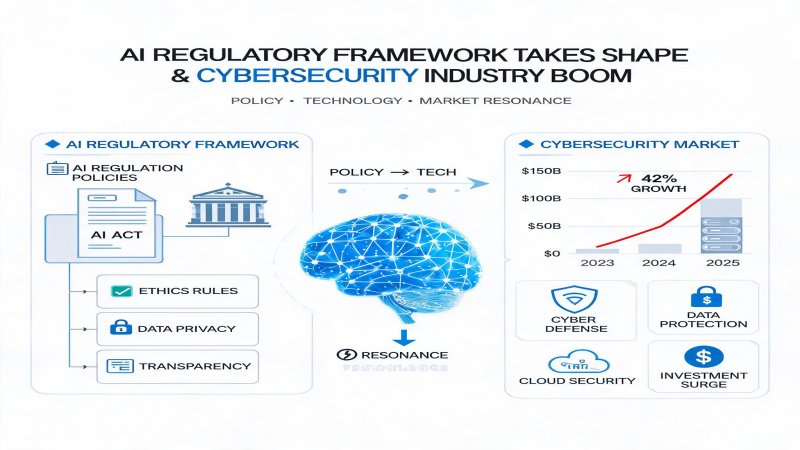
AI Regulatory Framework Takes Shape and Cybersecurity Industry Booms: Policy, Technology, and Market Resonance

In early July 2026, the U.S. lifted Anthropic model export controls, OpenAI proposed 5% government equity, and the government consulted AI companies on industry standards, marking accelerated AI regulatory framework formation. Simultaneously, Palo Alto Networks and CrowdStrike reported record quarterly results, Cloudflare announced AI crawler blocking, and Cisco implemented biweekly security patches, revealing structurally exploding AI security demand. Microsoft Azure China layoffs and Huawei terminal price increases reflect geopolitics' profound impact on technology supply chains.

AI Compute: From Scarcity to Glut? Tech Giants Reshape Business Models and Supply Chains

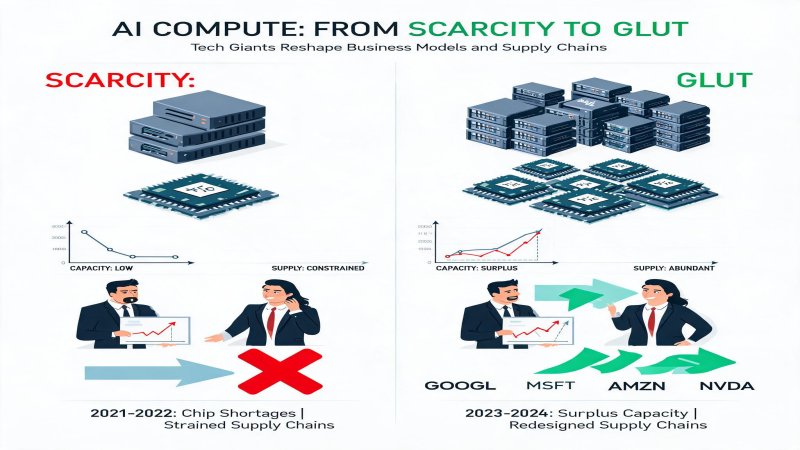
AI Compute: From Scarcity to Glut? Tech Giants Reshape Business Models and Supply Chains

In early July 2026, Meta's plan to sell AI compute, NVIDIA's revenue-sharing model, Microsoft's Frontier Company formation, ASML's guidance raise to EUR 36-40 billion, and Samsung's 20% DRAM price increase signal the AI infrastructure supply chain's transition from 'reckless construction' to 'rational returns.' Global top 9 cloud providers' 2026 capex is estimated at $830 billion, but Meta's buyer-to-seller transformation undermined market confidence in the 'compute scarcity' narrative. Microsoft Azure's lead in preferred cloud provider status widened from 7 to 27 percentage points.

The Claude Code Monitoring Gate: From Unicode Steganography to AI Supply Chain Trust Crisis

Anthropic embedded hidden detection code in Claude Code for 3 months, using system timezone checks, a 147-domain XOR-obfuscated blacklist, and Unicode steganography to flag Chinese users. After exposure, Anthropic admitted it was an "experiment" and rolled back the code, but Fable 5's new safety classifier caused mass misclassification of legitimate coding requests, exposing the fundamental tension between AI safety controls and developer trust.

AI Compute Supply Chain Divergence: The Dual Validation of Edge AI Explosion and Data Center Arms Race

NVIDIA's H2 data center revenue is expected to beat consensus by 20%, AMD raised graphics card prices by 10%, Google released the Nano Banana 2 Lite edge model, and Apple increased foldable iPhone orders to 10 million units. AI compute is undergoing structural rebalancing from cloud training to edge inference, reshaping pricing power and profit distribution across the semiconductor supply chain.

Cloud Computing Market Restructuring: Microsoft's Strategic Retreat vs. Meta/Amazon's Expansion Offensive

Microsoft announced thousands of layoffs and Azure China contraction, while Meta entered the cloud computing market for the first time and AWS established a $1 billion AI division. This marks a critical inflection point as cloud computing shifts from traditional IaaS to AI-cloud, with the strategic divergence of four giants reshaping enterprise IT spending.

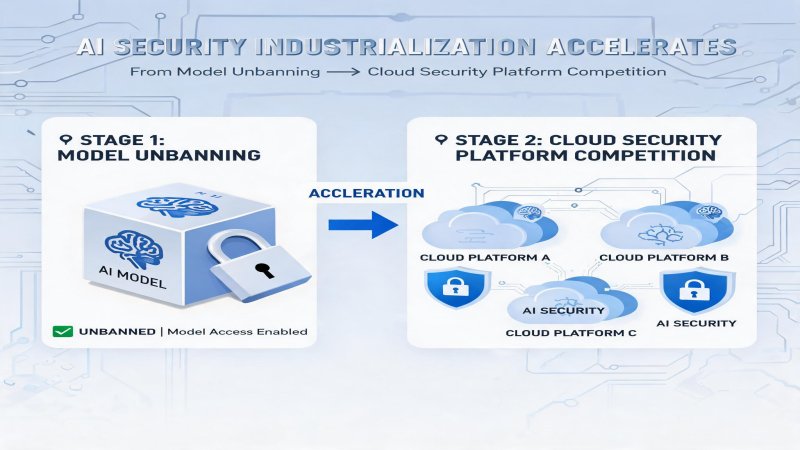
AI Security Industrialization Accelerates: From Model Unbanning to Cloud Security Platform Competition

AI Security Industrialization Accelerates: From Model Unbanning to Cloud Security Platform Competition

Anthropic's Fable/Mythos models were unbanned after committing to enhanced safety guardrails, with Claude Sonnet 5 launched at $2-3 per million tokens. CrowdStrike reported Q1 revenue of $1.386B with ARR reaching $5.51B and introduced Agentic MDR, while Fortinet posted Q1 revenue of $1.85B and unveiled FortiSOC. In contrast, Zscaler plunged over 30% on weak guidance, with its P/S ratio collapsing to 7.0x. AI security industrialization is shifting from proof-of-concept to commercial volume, with platformization capability and AI agent ecosystems becoming the core valuation differentiators.

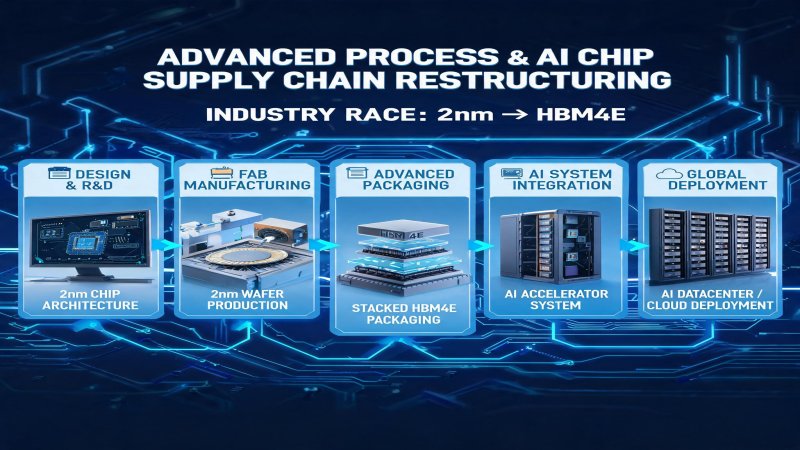
Advanced Process and AI Chip Supply Chain Restructuring: The Industry Race from 2nm to HBM4E

Advanced Process and AI Chip Supply Chain Restructuring: The Industry Race from 2nm to HBM4E

In July 2026, Samsung's HBM4E yield surpassed 70% with PRA scheduled for November; TSMC's single-day trading volume reached $6.65 billion topping US stocks, with UBS raising its target price to NT$3,400; Intel surged 459% over the past year with forward PE at 143x; Qualcomm announced the first 2nm Android flagship chip, Snapdragon 8 Elite Gen6. Advanced processes (2nm-class) and high-bandwidth memory (HBM4E) have become the two core battlegrounds reshaping the AI chip supply chain, with industry competition entering a white-hot phase.

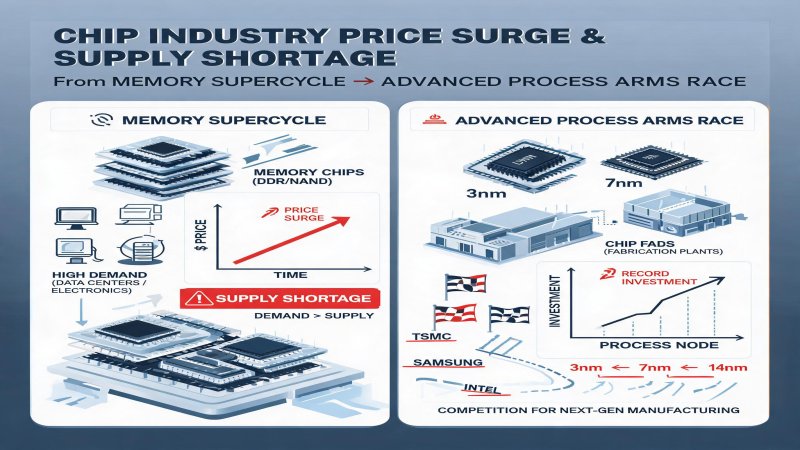
Chip Industry Price Surge and Supply Shortage: From Memory Supercycle to Advanced Process Arms Race

Chip Industry Price Surge and Supply Shortage: From Memory Supercycle to Advanced Process Arms Race

On June 30, 2026, AMD/NVIDIA graphics card prices rose 10%, NVIDIA revived RTX 3060 production, Qualcomm announced 2nm chips, and TSMC received a Morgan Stanley target price upgrade. These signals reveal AI demand is structurally reallocating global chip capacity: HBM expansion squeezes GDDR supply, TSMC 2nm is in severe shortage, and mature processes are experiencing a "second spring." Price hikes are expected to persist through H1 2027.

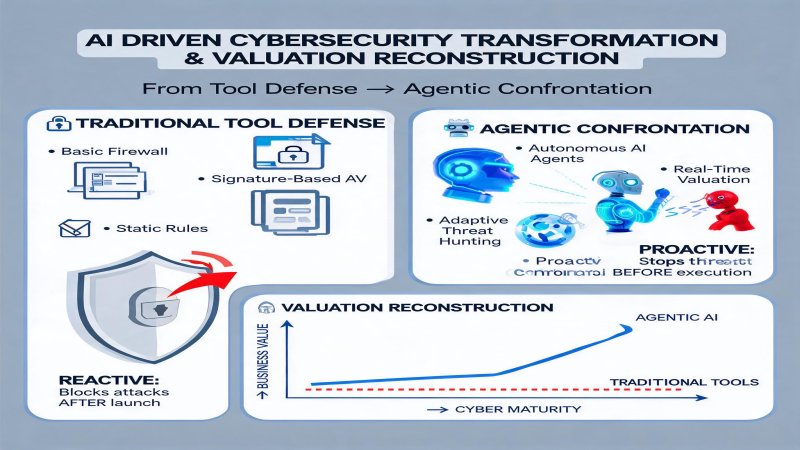
AI-Driven Cybersecurity Transformation and Valuation Reconstruction: From Tool Defense to Agentic Confrontation

AI-Driven Cybersecurity Transformation and Valuation Reconstruction: From Tool Defense to Agentic Confrontation

On June 30, 2026, four cybersecurity giants — PANW, Zscaler, Cloudflare, and Fortinet — simultaneously released critical AI security signals. PANW leads with a 65.1% YTD gain, Zscaler plunged 30% in a valuation correction, Cloudflare surged 4.29% on AI infrastructure demand, and Fortinet steadily grew with its FortiSOC launch. The AI security industry is transitioning from proof-of-concept to scaled monetization, while market valuation frameworks shift from SaaS models to platform models.

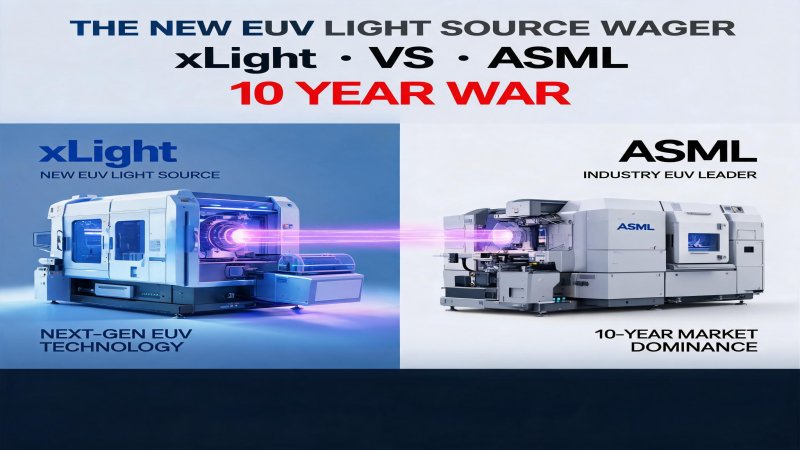
The New EUV Light Source Wager: xLight vs. ASML's Ten-Year War

The New EUV Light Source Wager: xLight vs. ASML's Ten-Year War

In June 2026, the U.S. CHIPS Act granted xLight $150M to develop FEL as an alternative EUV light source, challenging ASML's exclusive monopoly in EUV lithography. This article compares FEL vs. LPP technology roadmaps, analyzes Pat Gelsinger's strategic role, and independently assesses whether ASML's moat is secure in the short-to-medium term.