Technical Analysis

125articles
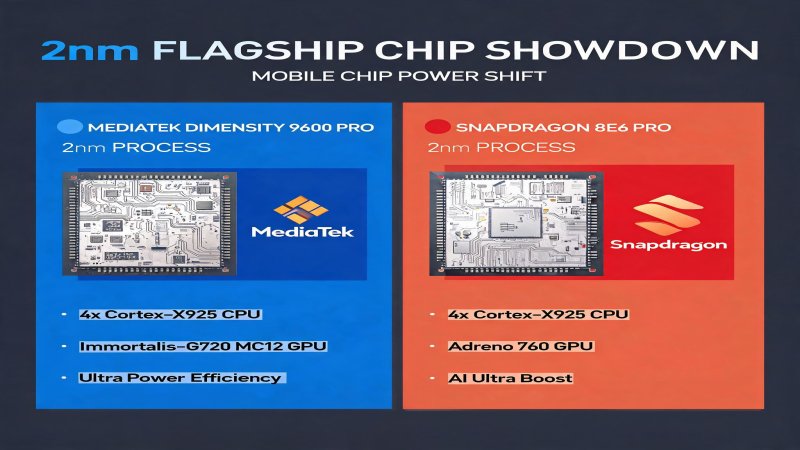
MediaTek Dimensity 9600 Pro vs Snapdragon 8E6 Pro: 2nm Flagship Chip Architecture Showdown and the Mobile Chip Power Shift

MediaTek Dimensity 9600 Pro vs Snapdragon 8E6 Pro: 2nm Flagship Chip Architecture Showdown and the Mobile Chip Power Shift

MediaTek Dimensity 9600 Pro features TSMC N2P 2nm, ARM C2-Ultra dual prime cores (~5GHz) in a 2+3+3 tri-cluster, Magni GPU, LPDDR6+UFS 5.0, and NGP neural accelerator. Qualcomm Snapdragon 8E6 Pro also uses N2P 2nm with 3rd-gen Oryon custom architecture, Adreno 850 GPU, and 18MB graphics cache. This marks the first head-to-head clash on identical process nodes, and a pivotal moment for mobile chip market dynamics.
The Supernode War: The Great Divergence of Global AI Compute Architectures

The Supernode War: The Great Divergence of Global AI Compute Architectures

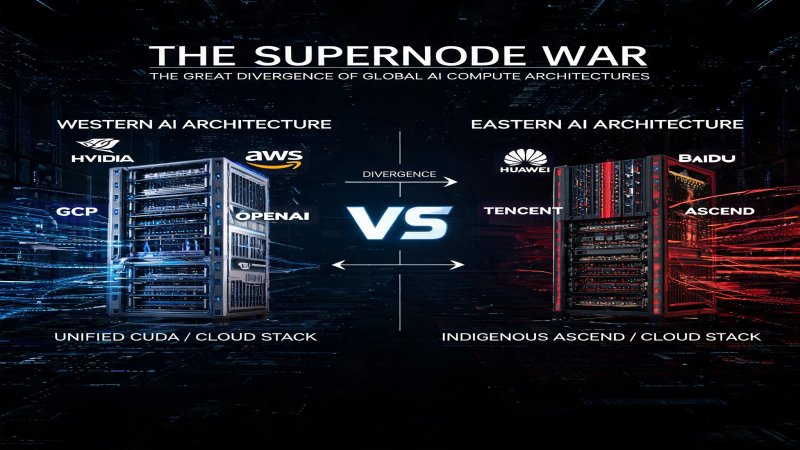
In H1 2026, a wave of AI supernode announcements reshaped the compute landscape: NVIDIA Vera Rubin NVL72 (3.6 TB/s/GPU), Google TPU v7 Ironwood (9,216 chips), Huawei Atlas 950 (8,192 NPUs), and AMD Helios (72-accelerator rack). Four distinct architectural routes make fundamentally different engineering trade-offs in topology, bandwidth density, scalability, and software ecosystems, driving AI infrastructure toward a multi-architecture paradigm.

AI Infrastructure Supply Chain Restructuring: Microsoft-AMD Helios Partnership + Intel 18A Yield Breakthrough + NVIDIA Compute Central Bank — A Triple Reshuffling

AI Infrastructure Supply Chain Restructuring: Microsoft-AMD Helios Partnership + Intel 18A Yield Breakthrough + NVIDIA Compute Central Bank — A Triple Reshuffling

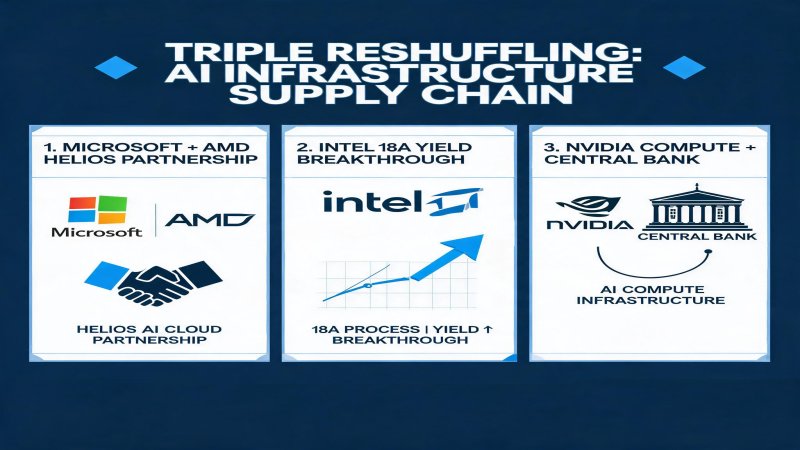
On July 20, 2026, three structural events hit the AI infrastructure supply chain within 24 hours: Microsoft Azure expanded partnership with AMD to deploy Helios rack-scale AI infrastructure (72 MI455X GPUs per rack + Venice EPYC + Pensando DPU), launching 3 new Azure instance families (ND MI455X v7/HDv2/HXv2); Intel Foundry 18A yields surged from 65% to 85% in a single quarter, with NVIDIA+AMD+Apple+Microsoft+OpenAI signing on, and EMIB packaging yields reaching 90-98%; NVIDIA invested $2 billion in CoreWeave, executing the 'compute central bank' model (credit enhancement + revenue sharing + GPU buyback). These three events mark AI infrastructure transitioning from the 'compute race' phase to a three-dimensional competition of 'supply chain resilience + TCO + local controllability.'

Anthropic Fable 5 Export Controls and Tiered Pricing: The Inflection Point Where AI Models Shift from Open to Scarce

Anthropic Fable 5 Export Controls and Tiered Pricing: The Inflection Point Where AI Models Shift from Open to Scarce

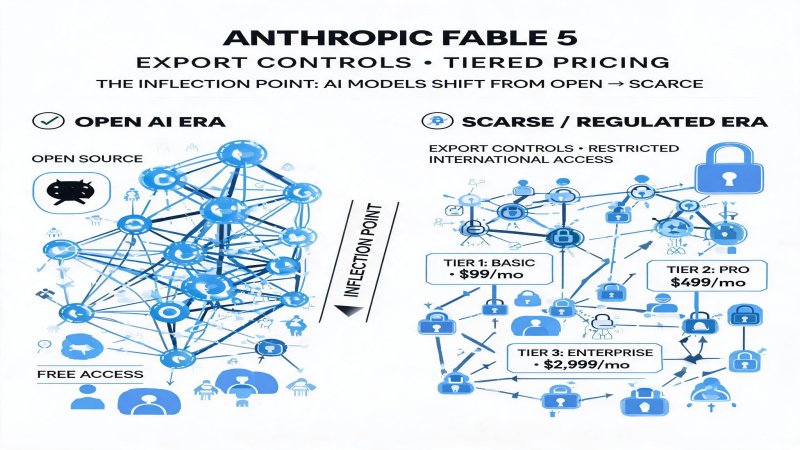
After US export controls on Anthropic's Fable 5/Mythos 5 in June 2026, Anthropic restored access but built a four-tier pricing ladder from Haiku 4.5 ($1/$5 per million tokens) to Fable 5 ($10/$50). Meanwhile, OpenAI appointed a new CTO of Compute to expand infrastructure, while Meta proposed a $10B compute leasing deal to Anthropic. The era of open access to frontier AI models is ending.

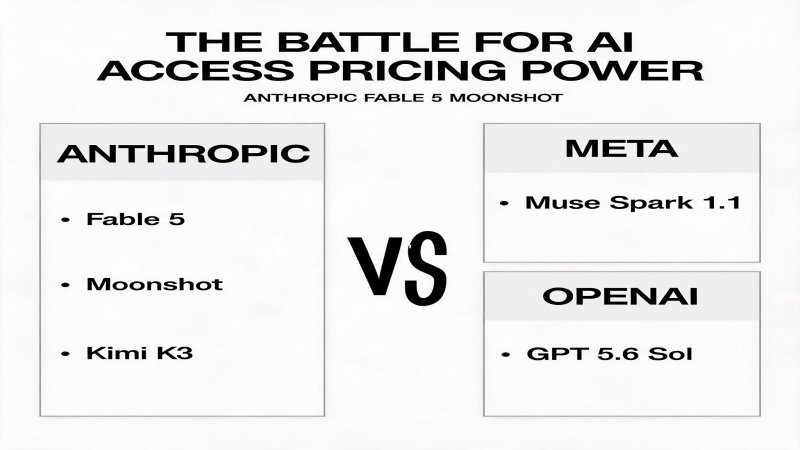
The Battle for AI Access Pricing Power: Anthropic Fable 5, Moonshot Kimi K3, Meta Muse Spark 1.1 and OpenAI GPT-5.6 Sol

The Battle for AI Access Pricing Power: Anthropic Fable 5, Moonshot Kimi K3, Meta Muse Spark 1.1 and OpenAI GPT-5.6 Sol

Between July 9-20, 2026 (an 11-day window), the global frontier AI market experienced a quadruple pricing battle: OpenAI GPT-5.6 Sol captured Fable 5 users at $5/$30 (per-task cost only 1/3); Meta Muse Spark 1.1 broke the open-source tradition with $1.25/$4.25 (25% price) and pivoted to closed-source API; Moonshot Kimi K3 formed an 'open-source + low-price' challenge with 2.8T parameters + 7-27 open source + $3/$15; Anthropic Fable 5 after 4 adjustments in 6 weeks was forced to implement '50% limit + Pro convert to usage credits.' This battle marks 'AI access pricing power' shifting from Anthropic single-pole to multi-polar, with 'commoditized AI' model becoming the new mainstream and 'open-source + closed-source' dual-track pattern forming.

WAIC 2026 Deep Dive: From "Model Wars" to "Year One of Agents" — China's AI Industry Shifts Gears

WAIC 2026 Deep Dive: From "Model Wars" to "Year One of Agents" — China's AI Industry Shifts Gears

The 2026 World Artificial Intelligence Conference (WAIC 2026) was held in Shanghai with exhibition space exceeding 100,000 sqm and over 1,100 participating companies. The most significant signal is the industry's shift from "model wars" to "agent deployment": among 130 AI exhibitors, 63.8% focus on AI Agents while only 18 on foundational models. Major launches include Huawei Atlas 950, Alibaba Zhenwu M890, Tencent's embodied intelligence stack, and StepFun's Agent OS. Meanwhile, US AI giants were collectively absent, accelerating the divergence of US-China AI ecosystems.

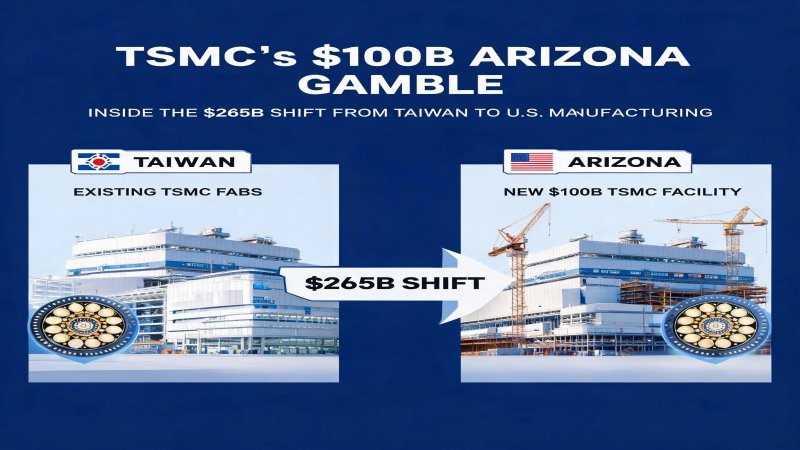
TSMC's $100B Arizona Gamble: Inside the $265B Shift from Taiwan to US Manufacturing

TSMC's $100B Arizona Gamble: Inside the $265B Shift from Taiwan to US Manufacturing

On July 16, 2026, TSMC reported record Q2 net profit of $22.08 billion, up 77.4% YoY, while announcing an additional $100 billion investment in Arizona, bringing total U.S. commitments to $265 billion for 10 fabs, 2 advanced packaging facilities, and 1 R&D center. The company also raised 2026 capex guidance to $60–64 billion.

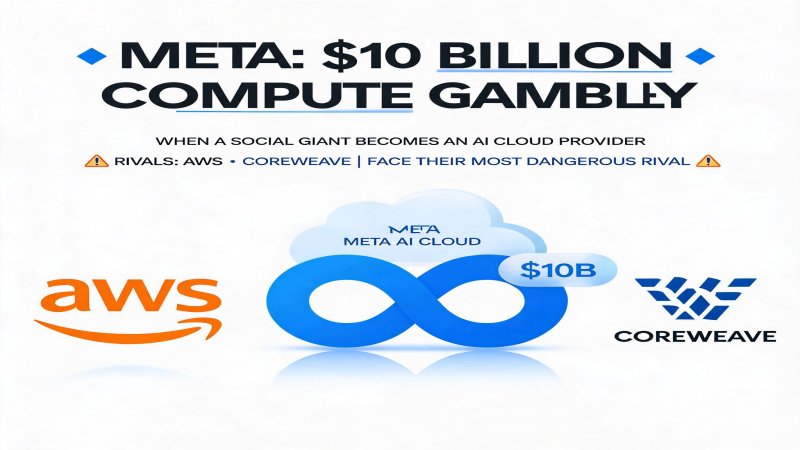
Meta's $10 Billion Compute Gamble: When a Social Giant Becomes an AI Cloud Provider, AWS and CoreWeave Face Their Most Dangerous Rival

Meta's $10 Billion Compute Gamble: When a Social Giant Becomes an AI Cloud Provider, AWS and CoreWeave Face Their Most Dangerous Rival

Meta is negotiating a landmark $10 billion compute leasing deal with Anthropic, marking the social media giant's aggressive entry into the AI cloud computing market. This move directly threatens traditional and emerging cloud providers like AWS and CoreWeave, potentially reshaping the competitive landscape of AI infrastructure.

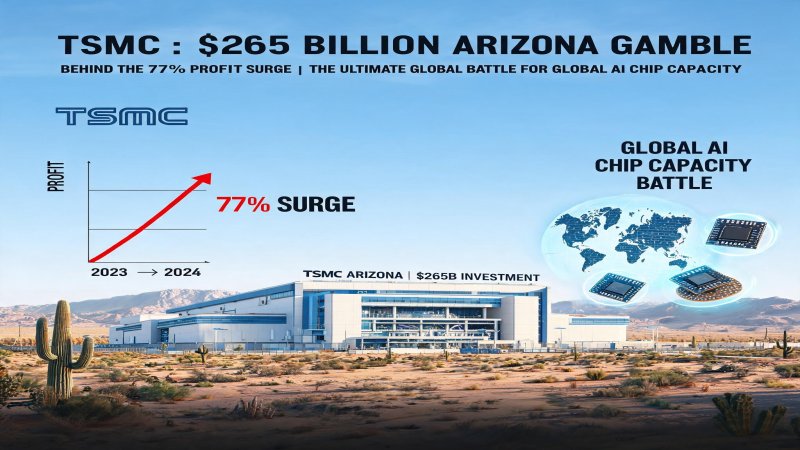
TSMC's $265 Billion Arizona Gamble: Behind the 77% Profit Surge, the Ultimate Battle for Global AI Chip Capacity

TSMC's $265 Billion Arizona Gamble: Behind the 77% Profit Surge, the Ultimate Battle for Global AI Chip Capacity

TSMC posted a record Q2 2026 net profit of $22.36 billion, surging 77.4% year-over-year on revenue of $40.2 billion, while simultaneously announcing an additional $100 billion investment in Arizona, bringing total commitments to a staggering $265 billion. The 2nm process node already contributed 3% of Q2 revenue and is expected to ramp to double-digit share within the next four quarters, marking another leap in advanced node commercialization.

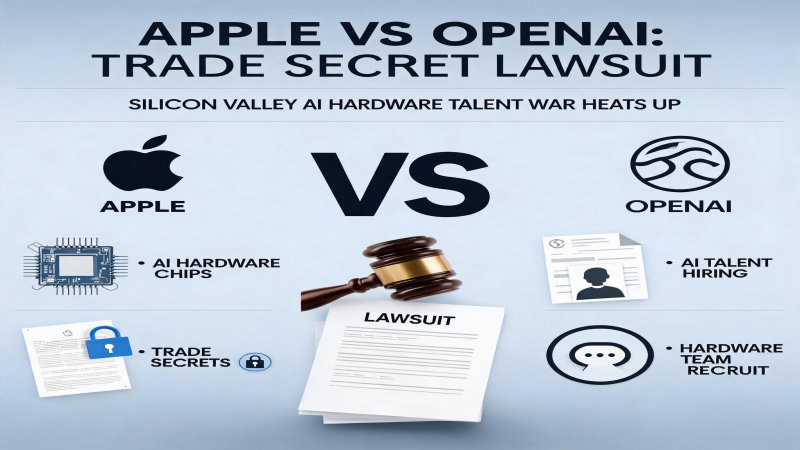
Apple vs OpenAI Trade Secret Lawsuit: Silicon Valley's AI Hardware Talent War Heats Up

Apple vs OpenAI Trade Secret Lawsuit: Silicon Valley's AI Hardware Talent War Heats Up

Apple sued OpenAI on July 10 for systematic poaching and trade secret theft, sending legal warnings to approximately 40 former employees on July 17. The lawsuit targets OpenAI Chief Hardware Officer Tang Tan (former Apple iPhone design lead) and engineer Chang Liu, alleging acquisition of confidential information on unreleased products, components, and supplier relationships. Over 400 former Apple employees currently work at OpenAI. This case marks the expansion of Silicon Valley AI competition from software to hardware entry points and will profoundly impact industry talent mobility rules and competitive dynamics.

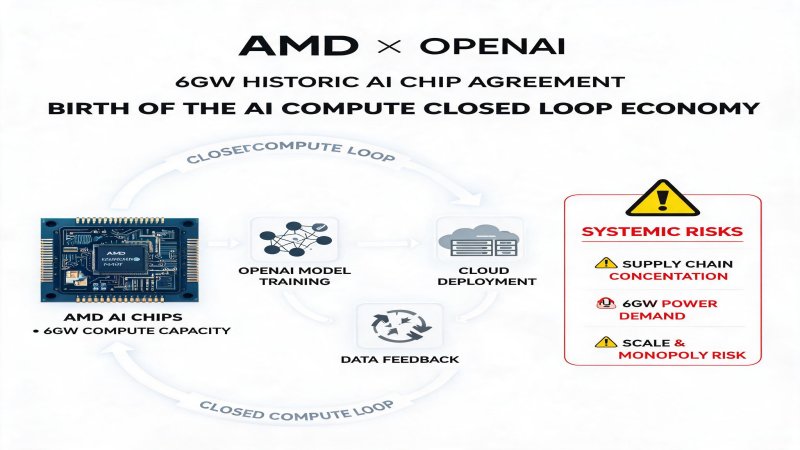
AMD-OpenAI 6GW Historic AI Chip Agreement: Birth of the AI Compute Closed-Loop Economy and Systemic Risks

AMD-OpenAI 6GW Historic AI Chip Agreement: Birth of the AI Compute Closed-Loop Economy and Systemic Risks

On July 16, 2026, AMD and OpenAI signed a historic 6GW compute supply agreement (equivalent to 450,000 households' electricity consumption), with OpenAI eligible to receive 160 million AMD warrants (approximately 10% equity) at a strike price of only $0.01. AMD shares surged 35% pre-market. The first 1GW will launch in 2026 H2 using MI450 GPUs. This agreement comes shortly after OpenAI's $100B investment with NVIDIA, combined with Broadcom's $10B and Cerebras' $20B, forming OpenAI's 'four-supplier' compute layout, marking the official birth of the 'AI Compute Closed-Loop Economy' (capital-equity-compute three-layer cycle).

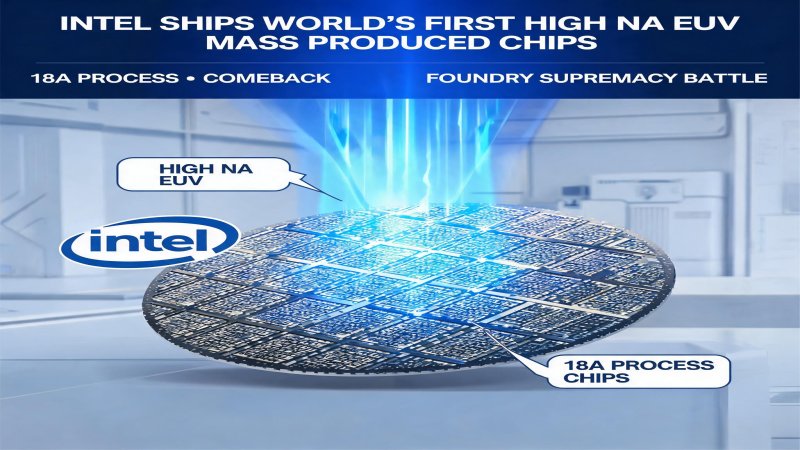
Intel Ships World's First High-NA EUV Mass-Produced Chips: The 18A Process Comeback and Foundry Supremacy Battle

Intel Ships World's First High-NA EUV Mass-Produced Chips: The 18A Process Comeback and Foundry Supremacy Battle

On July 15, 2026, Intel announced it became the world's first chipmaker to ship high-volume logic products using ASML High NA EUV lithography, producing Core Ultra Series 3 (Panther Lake) processors on its 18A process node. Each High NA EUV machine costs approximately $400 million, achieving 8nm resolution. Meanwhile, Intel 18A process yield has jumped from 65% to 85%, with Q2 revenue guidance of $13.8-14.8 billion. Although TSMC's Q2 net profit surged 77.4% to NT$706.6 billion, its High NA EUV mass production trails Intel by at least 3 years.