Weekly Industry Insights

May 11 - May 17 Weekly Insight

This week saw major shifts in AI infrastructure and security architectures, with vendors rapidly integrating AI agents, security, and edge computing capabilities, alongside the industrialization of AI-driven attacks.

Read More →

May 4 - May 10 Weekly Insight

AI agents evolve from tools to core enterprise control layers, driving full-scale restructuring of networking, security, and chip architecture, while government regulation and open ecosystems reshape competitive dynamics, marking a structural shift.

Read More →

Apr 27 - May 3 Weekly Insight

The industry has hit a critical inflection point for the large-scale deployment of AI agents, driving simultaneous transformation in infrastructure, security, and alliance structures.

Read More →

All Insights

TSMC Q1 Confirms AI Compute Arms Race Has Entered the Chip Inflation Era

TSMC Q1 Confirms AI Compute Arms Race Has Entered the Chip Inflation Era

TSMC Q1 earnings show HPC crossed 60% revenue share for the first time, reaching 61%, marking a structural shift in AI compute demand. Gross margin hit 66.2% historical high, while CoWoS advanced packaging capacity remains tight through 2027. Supply-demand imbalance drives chip inflation - AI chip unit costs unlikely to decline in 2-3 years, and the window to lock long-term compute contracts is narrowing.

Intel TeraFab Alliance: Musk + Intel AI Chip Factory Reshapes Foundry Landscape

Intel TeraFab Alliance: Musk + Intel AI Chip Factory Reshapes Foundry Landscape

Intel officially joined the TeraFab project as the core foundry partner for Musk's SpaceX, xAI, and Tesla chip manufacturing initiative. TeraFab targets 100 terawatts of annual AI compute output - 50 times current global capacity. Intel contributes its 18A process node, the only cutting-edge logic process manufactured entirely within the US. The alliance's impact on the global foundry landscape is profound, but technical challenges are equally severe.

Cisco IOS-XE 26.1.1 Security Baseline Upgrade: Telnet/SNMP Disable Impact & Migration Guide

Cisco IOS-XE 26.1.1 Security Baseline Upgrade: Telnet/SNMP Disable Impact & Migration Guide

Cisco's Resilient Infrastructure initiative marks a strategic leap from "advisory security" to "secure by default". Through a three-stage Warning-Restriction-Removal approach, Cisco is mandating the retirement of insecure protocols like Telnet, SNMPv1/v2c, and Type 0/5/7 passwords. IOS-XE 26.1.1 has already disabled all insecure CLI commands by default, expected to reshape enterprise network security baselines.

AI Grid: How NVIDIA is Transforming Telecom Networks into AI Inference Highways

AI Grid: How NVIDIA is Transforming Telecom Networks into AI Inference Highways

NVIDIA's AI Grid transforms telecom networks into distributed AI inference infrastructure. It leverages SRv6, network slicing, and dynamic CUDA pool reuse to slash edge inference latency by 72% and cost by 64% vs. centralized cloud. This complementary solution accelerates low-latency AI adoption and is poised to reshape the inference market landscape.

Deepfake Detection: From Technical Warfare to Enterprise-Grade Standard

Deepfake Detection: From Technical Warfare to Enterprise-Grade Standard

Deepfake threats are growing at an exponential rate, with online content increasing 900% in two years and financial fraud losses exceeding billions of dollars. From Intel's blood flow analysis to C2PA cryptographic provenance standards, detection technology is undergoing a fundamental shift from passive forensics to active source authentication. This article provides an in-depth analysis of mainstream detection technology routes, market landscape, and emerging research directions to guide enterprise deepfake defense strategies.

AI Inference Optimization: Strategic Opportunities in the Token Cost-Performance Era

AI Inference Optimization: Strategic Opportunities in the Token Cost-Performance Era

In 2026, AI infrastructure is experiencing a historic shift from 'training-dominated' to 'inference-dominant' architecture. Inference compute now accounts for over 70% of global AI compute demand, becoming the core consideration for data center deployments. NVIDIA GB300 NVL72 redefines hardware standards with 50x inference performance improvement, AMD MI355X builds cost advantages with 288GB HBM3E, and Google TPU v7 sets energy efficiency benchmarks with 100% liquid cooling. Meanwhile, software optimization technologies like TurboQuant, RWKV-6, and DTR are restructuring inference economics—Token cost-performance is becoming the new core competitiveness following parameter scale.

Agentic SOC: The Paradigm Revolution in Security Operations

Agentic SOC: The Paradigm Revolution in Security Operations

Agentic SOC is reshaping security operations. Palo Alto, Alibaba Cloud, Prophet, and Elastic compete head-to-head, reducing investigation time from 30 minutes to 5 minutes with 100% alert coverage. Traditional Tier1 analysts face transformation as SOC evolves from alert triage center to threat decision hub.

FortiOS 8.0 MCP/A2A Agent Protocol Support Technical Insight

FortiOS 8.0 MCP/A2A Agent Protocol Support Technical Insight

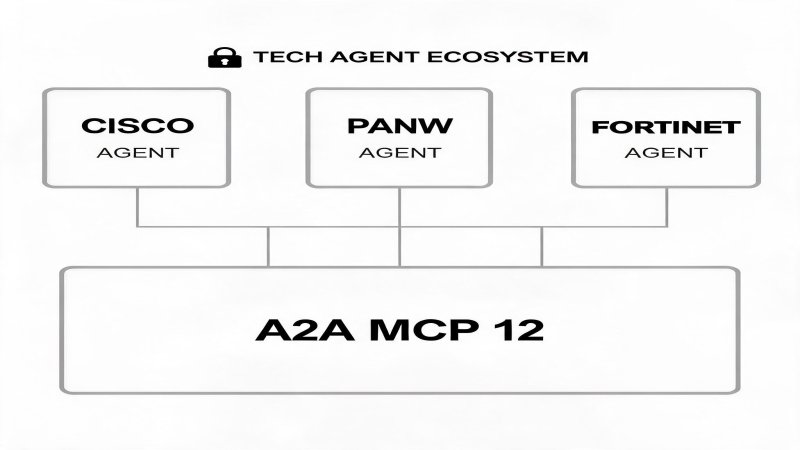
FortiOS 8.0 introduces MCP/A2A agent protocol support, marking enterprise network security formally entering the AI-native security era. MCP is led by Anthropic, A2A donated by Google to Linux Foundation, FortiGate implements protocol detection and monitoring through GenAI application signature database.

Strategic Implications Analysis of the $100 Billion Binding Between Anthropic-Claude and AWS

Strategic Implications Analysis of the $100 Billion Binding Between Anthropic-Claude and AWS

The $100B AWS-Anthropic binding signals AI's shift to oligopolistic alliance competition, trading resources for time and market for security. It accelerates industry consolidation, raising concerns over vendor lock-in, financial bubbles from recurring financing, and ecosystem rivalry. Enterprises must balance integration benefits with flexibility risks; investors must scrutinize true value beyond related-party transactions.

Claude Mythos System Card: In-Depth Analysis of Officially Disclosed Cybersecurity Capabilities and Industrial Impact

Claude Mythos System Card: In-Depth Analysis of Officially Disclosed Cybersecurity Capabilities and Industrial Impact

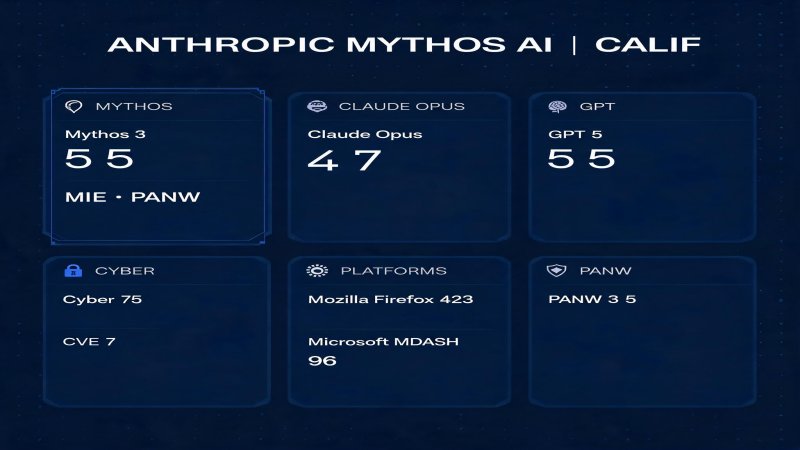
Anthropic's disclosure of Claude's native cybersecurity capabilities via the Mythos System Card, followed by rapid integration by major vendors, signals a shift towards AI as a core security analysis engine. The report analyzes its architecture and key technologies like vulnerability discovery, highlighting performance claims that lack real-world validation and inherent LLM risks like hallucinations. Anthropic's open ecosystem strategy aims to establish a standard 'capability layer,' accelerating industry consolidation and pressuring traditional vendors.

CPU Returns to the Core of AI: Intel's Financial Report Validates the Restructuring of Compute Architecture

CPU Returns to the Core of AI: Intel's Financial Report Validates the Restructuring of Compute Architecture

Intel's Q1 2026 report, showing 22% DCAI revenue growth and 7% total revenue growth and a CPU:GPU ratio rebound from 1:8 to 1:4, signals a restructuring of AI compute architecture. The shift is driven by low GPU utilization and high TCO from past over-reliance on GPUs, countered by rising inference workloads that highlight CPU value for data preprocessing. Industry data, research, and new CPU tech validate this sustainable trend toward balanced hybrid compute (CPU+GPU), impacting infrastructure planning and investment focus.

Cisco FIRESTARTER Backdoor: A New Paradigm of APT Attacks Bypassing Firmware Patches

Cisco FIRESTARTER Backdoor: A New Paradigm of APT Attacks Bypassing Firmware Patches

In April 2026, a joint CISA/NCSC-UK advisory disclosed an APT campaign using the FIRESTARTER backdoor against Cisco devices. The backdoor achieves 'post-patch persistence' by tampering with a reserved NVRAM partition, bypassing standard firmware updates. This severely challenges the 'patch-to-fix' assumption for firmware, exposes firmware security blind spots, poses an ongoing threat to global critical infrastructure, and may drive advancements in firmware security technology and regulatory standards.