
Weekly Industry Insight (May 4 - May 10, 2026)
AI agents evolve from tools to core enterprise control layers, driving full-scale restructuring of networking, security, and chip architecture, while government regulation and open ecosystems reshape competitive dynamics, marking a structural shift.
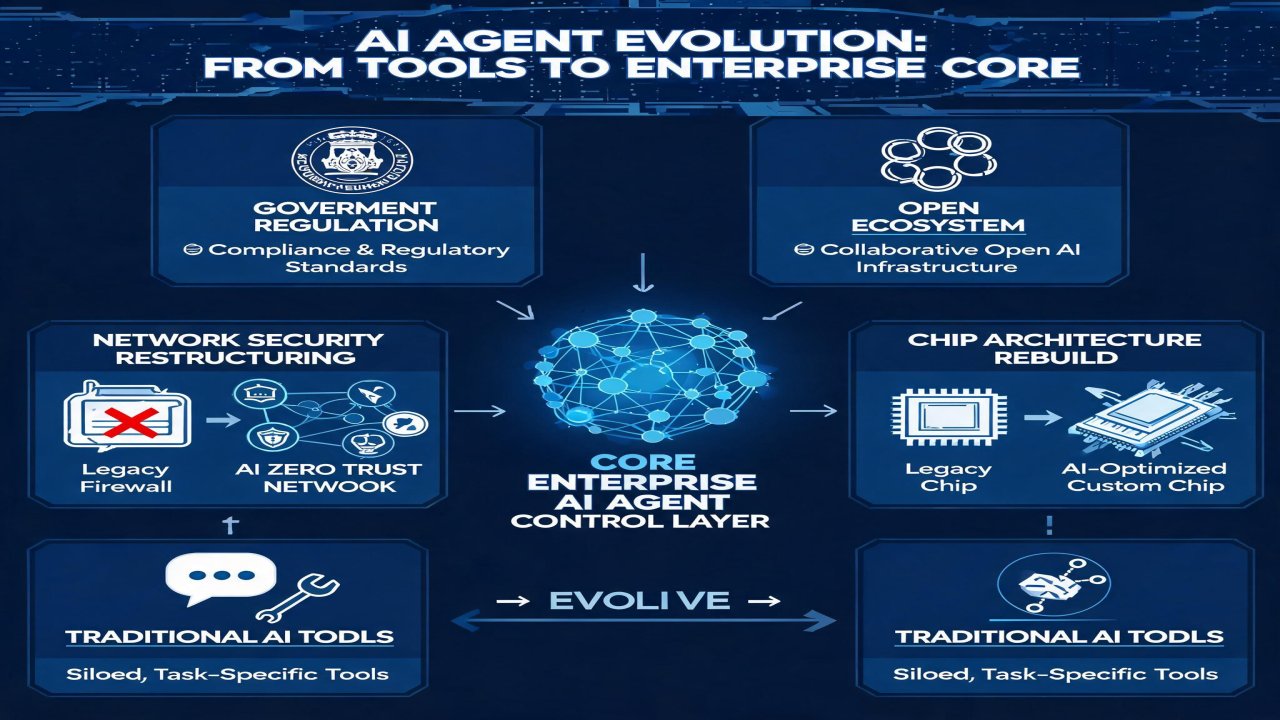
Strategic Insights
1. AI Agent Platformization: The New Infrastructure Battleground
2. Networking Becomes the Intelligent Control Plane for AI Infrastructure
3. AI Security Enters a New Era of 'Non-Human Identity + Runtime Defense'
PRO Decision Signal
For Vendors
Accelerate building a complete AI agent platform stack including orchestration, identity, security, and toolchains; actively participate in open standards (e.g., MRC, MCP) to capture ecosystem positions; invest in industry templates and vertical SaaS to shorten time-to-value; and simultaneously position for edge AI and CPU-GPU heterogeneous architectures to avoid single accelerator dependency.
For Enterprises
Immediately establish an AI agent governance framework including non-human identity management, security shift-left, and runtime monitoring; prioritize intelligent platforms with AI workload awareness in network upgrades; adopt a multi-model strategy to avoid single-vendor lock-in; evaluate new architectures like Arm AGI to optimize TCO; monitor government AI security review developments and embed compliance into procurement criteria.
For Investors
Focus on startups in the AI agent infrastructure layer (orchestration, security, identity), especially in non-human identity security and eBPF runtime defense; for networking vendors, invest in those with strong AI automation orchestration capabilities (e.g., HPE, Cisco); in chips, watch Arm ecosystem and AMD's heterogeneous strategy; be cautious of single-model-dependent companies like OpenAI facing platformization competition risks.
Trends Evolution
AI Agentic Systems
StableNetwork for AI
StableAI Security Evolution
StableChip Ecosystem Evolution
StableOpen AI Ecosystems
StableAI Model Governance
StableEdge AI
StableAI Infrastructure Evolution
StableAI Capital Competition
StableAI Verticalization
StableGet 3-5 key AI infrastructure signals weekly →