
Weekly Industry Insight (May 11 - May 17, 2026)
This week saw major shifts in AI infrastructure and security architectures, with vendors rapidly integrating AI agents, security, and edge computing capabilities, alongside the industrialization of AI-driven attacks.
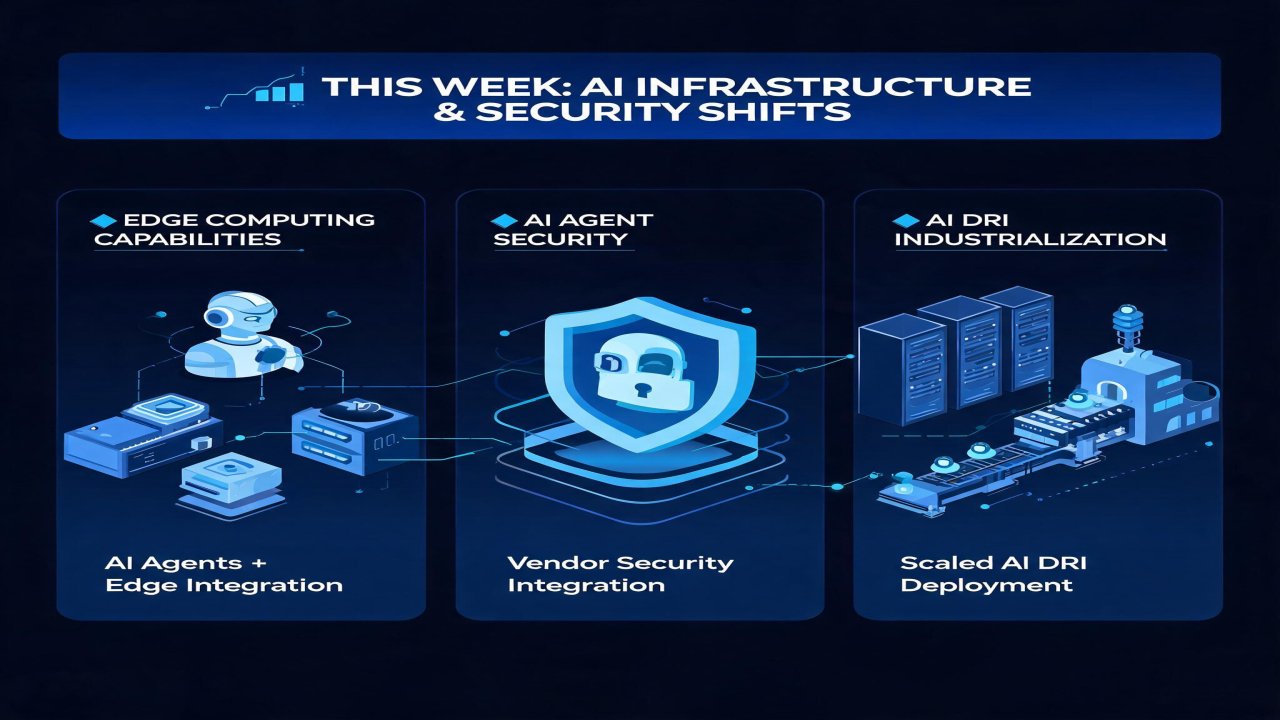
Strategic Insights
1. Battle for AI Infrastructure Control Points
2. Paradigm Shift in AI Security Architecture
3. Enterprise AI Scaling Pathways
PRO Decision Signal
For Vendors
Embed security capabilities into AI development frameworks (e.g., Google ADK) and runtime layers, while establishing architectural standards through new categories like AI-NICs and AI-native PCs.
For Enterprises
Prioritize AI platforms with unified control planes (e.g., Agent 365) and deep Red Hat integration, moving governance upstream to the design phase (following Google's Application Design Center model).
For Investors
Focus on AI infrastructure bottleneck areas (e.g., Arm server CPUs, DPU security offload chips) and vendors enabling edge-cloud collaborative agent architectures.
Trends Evolution
AI Infrastructure Evolution
StableAI Security Integration
StableAI Agentic Systems
StableAI Infrastructure Bottlenecks
StableGet 3-5 key AI infrastructure signals weekly →