Weekly Industry Insights

Jun 22 - Jun 28 Weekly Insight

This week saw diversified developments in AI infrastructure, with vendors competing for control through custom chips, liquid cooling, and vertical integration, while ARM server market share exceeded 45%, accelerating the shift to AI-native architectures.

Read More →

Jun 15 - Jun 21 Weekly Insight

This week shows dual trends of hardware lock-in and software ecosystem restructuring in AI infrastructure, alongside rising global AI model export control risks.

Read More →

Jun 8 - Jun 14 Weekly Insight

This week's core trend shows AI infrastructure vendors strengthening control through technical lock-in and ecosystem integration, with security automation and AI agent governance emerging as new focal points.

Read More →

All Insights

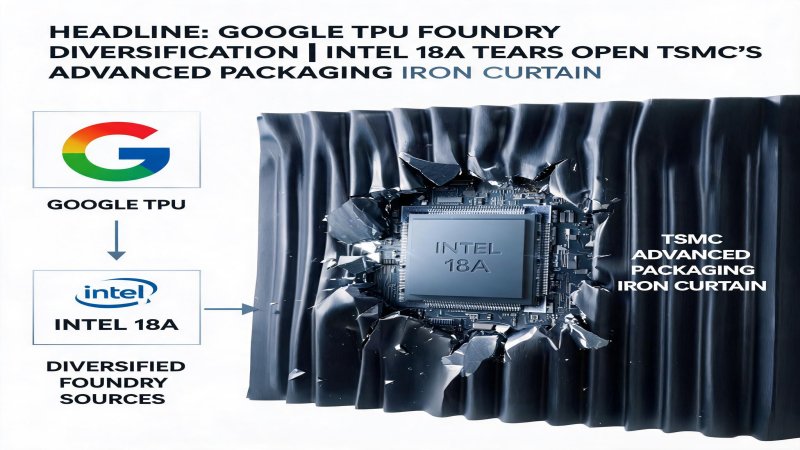
Google TPU Foundry Diversification: Intel 18A Tears Open TSMC's Advanced Packaging Iron Curtain

Google TPU Foundry Diversification: Intel 18A Tears Open TSMC's Advanced Packaging Iron Curtain

In June 2026, Google ordered over 3 million TPUs from Intel Foundry for 2028 delivery. This article analyzes Intel 18A + EMIB/Foveros vs. TSMC CoWoS, evaluates the feasibility and cost of de-TSMC-ization, and discusses the geopolitical risks of foundry capacity outside Taiwan, China.
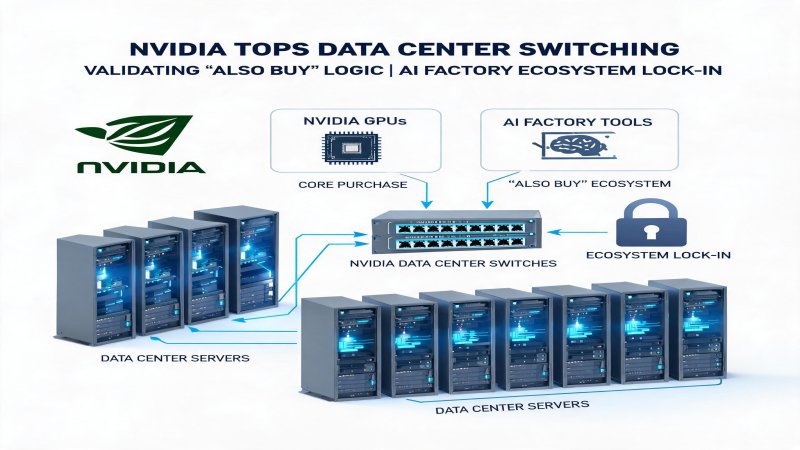
NVIDIA Tops Data Center Switching: Validating the Also-Buy Logic of AI Factory Ecosystem Lock-in

NVIDIA Tops Data Center Switching: Validating the Also-Buy Logic of AI Factory Ecosystem Lock-in

NVIDIA took the top spot in data center Ethernet switching in Q1 2026 with $2.1B revenue and 21.5% share, up 192.7% YoY. This article analyzes Spectrum-X's full-stack bundling strategy and evaluates the sustainability of the buy-GPU-also-buy-network ecosystem lock-in.

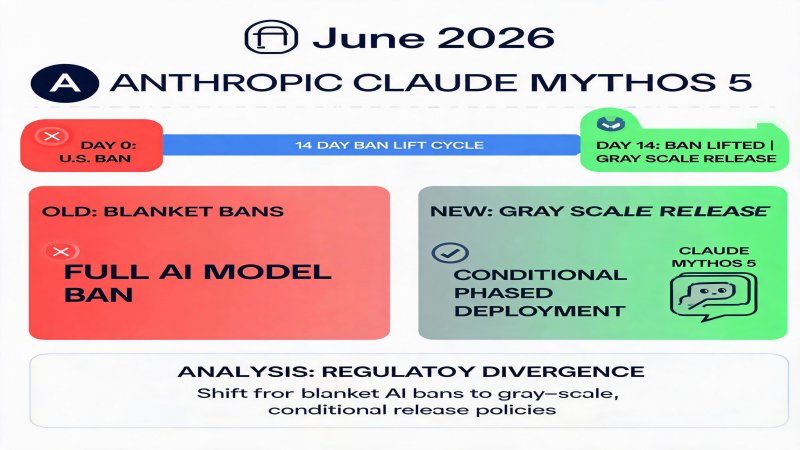
The Era of AI Model "Gray-Scale Release": Trust Qualification Becomes the Fourth Competitive Dimension

The Era of AI Model "Gray-Scale Release": Trust Qualification Becomes the Fourth Competitive Dimension

In June 2026, Anthropic's Claude Mythos 5 experienced a 14-day "ban-lift" cycle in the U.S., marking AI model regulation's shift from blanket bans to gray-scale release. This article analyzes the divergence in government relations strategies among Anthropic, OpenAI, and Google, and predicts that trust qualification will become the fourth dimension of AI competition, accelerating regional fragmentation of the global AI supply chain.

Deep Dive: Palo Alto Networks' Strategy for AI-Powered Attacks and Network Device Security Architecture

Deep Dive: Palo Alto Networks' Strategy for AI-Powered Attacks and Network Device Security Architecture

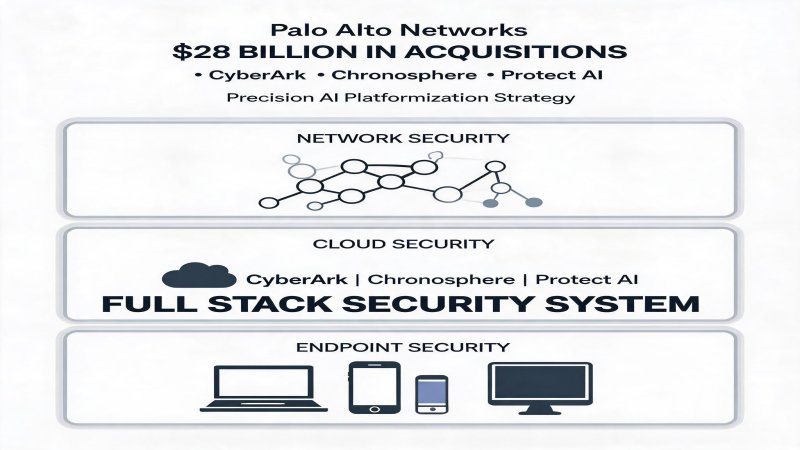
Through $28 billion in acquisitions (CyberArk/Chronosphere/Protect AI) and its "Precision AI + Platformization" strategy, Palo Alto Networks builds a full-stack security system covering network, cloud, endpoint, identity, and AI with Prisma AIRS (only full AI lifecycle coverage), PAN-OS 12.1 Orion (industry's first quantum-ready NGFW), and Device Security (2000+ attribute dimensions). Q4 2025 NGS ARR was $5.6 billion (up 32% YoY), with over $2 billion in Google Cloud partnership revenue.

Deep Dive: Fortinet's Strategy for AI-Powered Attacks and Network Device Security Architecture

Deep Dive: Fortinet's Strategy for AI-Powered Attacks and Network Device Security Architecture

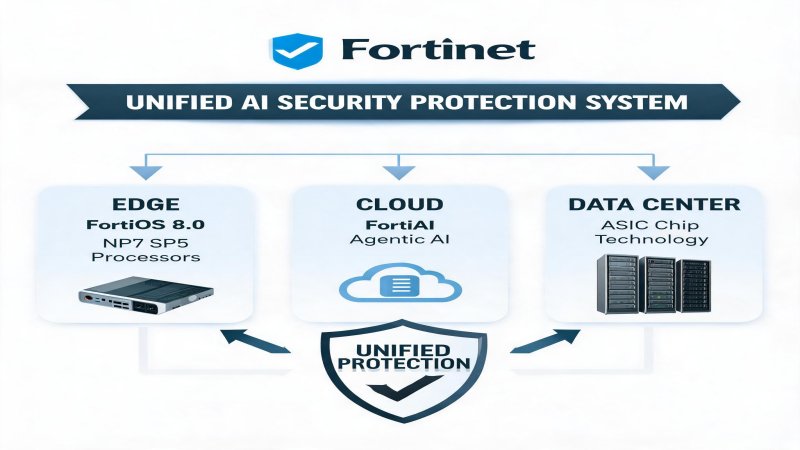
Fortinet builds a unified AI security protection system covering edges, cloud, and data centers through the trinity of FortiOS 8.0 unified OS (NP7/SP5 processors), FortiAI Agentic AI, and ASIC chip technology with cumulative $1B+ investment. FY2025 revenue was $6.8 billion (up 14% YoY), free cash flow $2.21 billion, operating margin 35%.

Deep Dive: HPE's Strategy for AI-Powered Attacks and Network Device Security Architecture

Deep Dive: HPE's Strategy for AI-Powered Attacks and Network Device Security Architecture

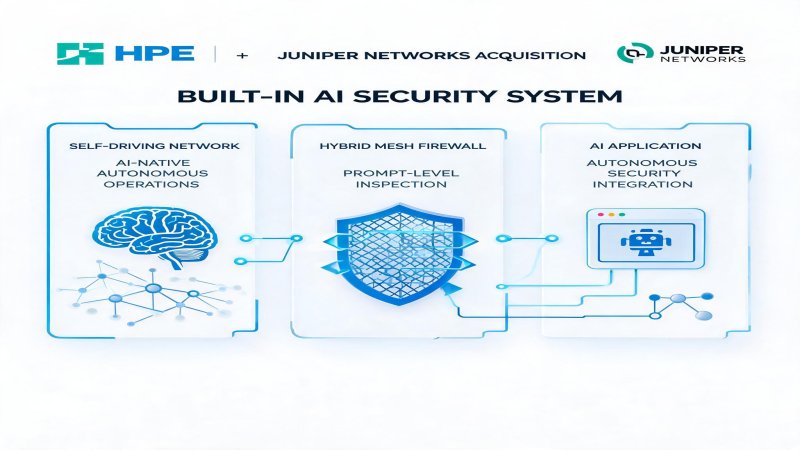
Through the Juniper Networks acquisition, HPE builds a "built-in security" system using Self-Driving Network (AI-native autonomous operations), Hybrid Mesh Firewall (prompt-level inspection, AI application visibility), and SRX400 series (1.4 Tbps Trio ASIC) to achieve AI security protection from core to edge. Q2 FY2026 networking revenue was $2.7 billion (up 151.5% YoY), with full-year target approximately $11 billion.

Deep Dive: Cisco's Strategy for AI-Powered Attacks and Network Device Security Architecture

Deep Dive: Cisco's Strategy for AI-Powered Attacks and Network Device Security Architecture

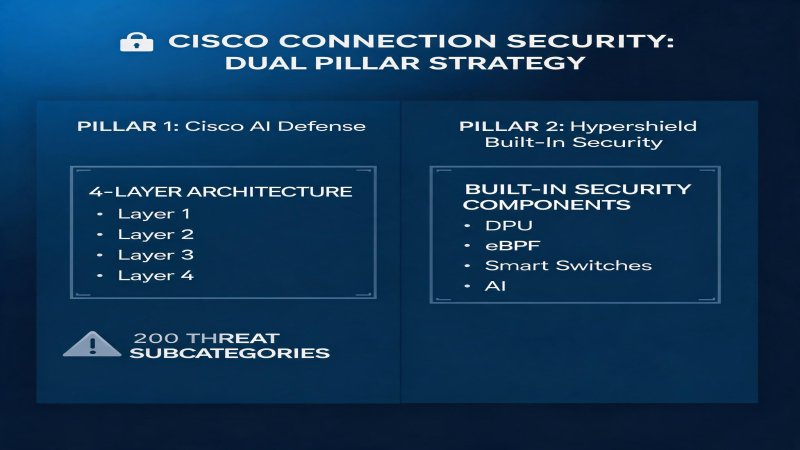
Cisco's "Connection + Security" dual-pillar strategy centers on Cisco AI Defense's four-layer architecture (200+ threat subcategories), Hypershield's built-in security paradigm (DPU+eBPF+smart switches), and AI-native network devices (post-quantum cryptography, Silicon One G200), building a full-stack AI security system from infrastructure to agents. FY2025 security revenue share reached 19.5% (up 59% YoY), with Q1 FY2026 AI infrastructure orders at $1.3 billion.

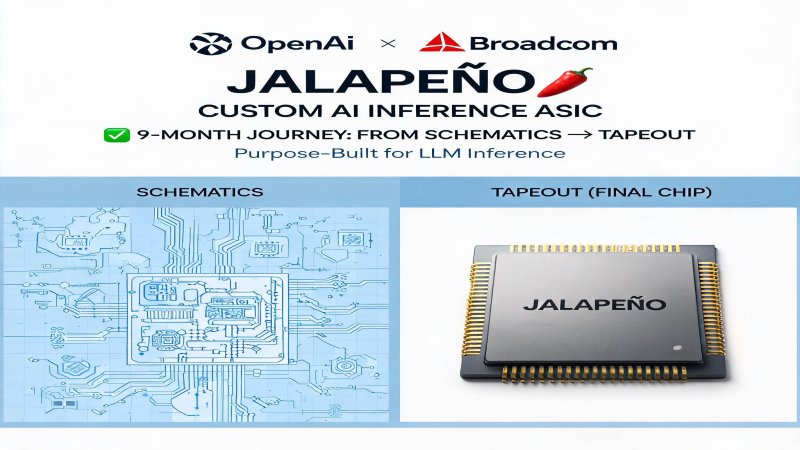
OpenAI and Broadcom Tape Out Custom Inference Chip Jalapeño in 9 Months, Challenging NVIDIA Ecosystem

OpenAI and Broadcom Tape Out Custom Inference Chip Jalapeño in 9 Months, Challenging NVIDIA Ecosystem

OpenAI and Broadcom unveiled Jalapeño, their first custom AI inference chip, completing the journey from schematics to tape-out in just nine months. This ASIC, purpose-built for LLM inference, represents OpenAI's hardware breakthrough under dual pressure: $20.9B annual losses and an imminent IPO. The chip targets inference cost reduction and reduced NVIDIA dependency as OpenAI evolves into a full-stack AI company.

Agent IAM: When Identity Governance Shifts from Managing Access to Governing Agency — A Panoramic Analysis of the 2026 Agent Identity Governance Inflection Point

Agent IAM: When Identity Governance Shifts from Managing Access to Governing Agency — A Panoramic Analysis of the 2026 Agent Identity Governance Inflection Point

May 2026 saw a concentrated burst in Agent identity governance: Clarity Aperture, Forrester AEGIS, Ping Identity four classes, AWS four-scope autonomy, Entra Agent ID, and Anthropic Zero Trust whitepaper all released in one month. Industry consensus is forming: agents are a new identity class requiring independent identity, least agency, and runtime authorization. But four routes (IETF protocol standardization/Microsoft platform lock-in/Forrester governance framework/Cisco network infrastructure) are complementary short-term but will collide mid-term, while endpoint Agent detection and Agent behavior compliance remain the largest structural gaps. EU AI Act high-risk obligations take effect in August, leaving less than 3 months for compliance.

Microsoft Build 2026: Birth of Agent OS — Windows Paradigm Shift from Application Platform to Agent Runtime

Microsoft Build 2026: Birth of Agent OS — Windows Paradigm Shift from Application Platform to Agent Runtime

Build 2026's seven announcements form a complete Agent OS blueprint: runtime layer defines Agent standards, application layer enables delegated execution, governance layer addresses permission explosion, distribution layer's 85% revenue share captures developers. 300M M365 users face passive upgrade with 6-month governance vacuum misaligned with EU AI Act compliance deadline.

The CPU War in the Agent Inference Era: Three-Way Battle Between NVIDIA Vera, Intel Xeon 6+, and Qualcomm Dragonfly

The CPU War in the Agent Inference Era: Three-Way Battle Between NVIDIA Vera, Intel Xeon 6+, and Qualcomm Dragonfly

Three vendors announced Agent-optimized CPUs in the same week with fundamentally different approaches: NVIDIA Vera creates a new category (Arm+LPDDR5X), Intel Xeon 6+ holds x86 with architectural restructuring (1:1 CPU:GPU), Qualcomm Dragonfly pursues end-cloud unification. Intel's revelation of CPU:GPU ratio shifting from 1:4 to 1:1 is critical—CPU returns as data center core, directly challenging NVIDIA's all-GPU narrative.

Why NVIDIA CEO Jensen Huang Is Wrong About Huawei's τ Law: Logic Folding Is Not TSMC's 3D Packaging

Why NVIDIA CEO Jensen Huang Is Wrong About Huawei's τ Law: Logic Folding Is Not TSMC's 3D Packaging

Jensen Huang equated Huawei's τ Law with TSMC's 3D packaging and declared it not a threat—a category error. Logic folding is front-end true-3D redesign; 3D packaging is back-end pseudo-3D integration with 500× fewer inter-layer connections. At 30-40% cost, 7nm + logic folding approaches 3nm density, fundamentally reshaping mid-market demand curves.