
Weekly Industry Insights

Jul 13 - Jul 19 Weekly Insight

AI chip supply chain restructuring accelerates with TSMC price hikes and advanced packaging expansion, while NVIDIA and Huawei vie for AI compute dominance, and cybersecurity faces new threats.

Read More →

Jun 22 - Jun 28 Weekly Insight

This week saw diversified developments in AI infrastructure, with vendors competing for control through custom chips, liquid cooling, and vertical integration, while ARM server market share exceeded 45%, accelerating the shift to AI-native architectures.

Read More →

Jun 15 - Jun 21 Weekly Insight

This week shows dual trends of hardware lock-in and software ecosystem restructuring in AI infrastructure, alongside rising global AI model export control risks.

Read More →

All Insights

In-Depth Technical Analysis Report: Claude Mythos and Project Glasswing

In-Depth Technical Analysis Report: Claude Mythos and Project Glasswing

This report analyzes the four-layer AI security governance stack built by Claude Mythos and Project Glasswing. It features autonomous security agents using multimodal Transformers and reinforcement learning, hardware-accelerated privacy computing, and a standardized alliance framework for end-to-end automated defense. Key strengths are its adaptive, evolutionary defense concept and open ecosystem. Major open challenges include the RL simulation-reality gap, trust/privacy in alliance collaboration, automation accountability, and adversarial risks against the defensive AI itself.
Intel's AI Infrastructure Counteroffensive: A Deep Technical Analysis of the CPU+IPU Heterogeneous Architecture

Intel's AI Infrastructure Counteroffensive: A Deep Technical Analysis of the CPU+IPU Heterogeneous Architecture

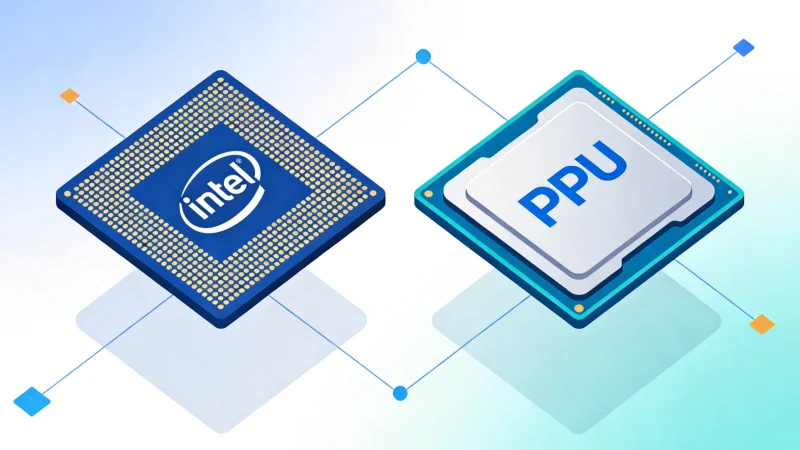
This report provides a deep technical analysis of Intel's "CPU+IPU" heterogeneous architecture for AI data centers. It details how the IPU layer enables hardware offload, resource isolation/composability, and AI-optimized communications, supported by the unified OneAPI/IPDK software stack. The analysis covers technical principles, workflows, and highlights key challenges including performance validation, third-party GPU interoperability, software maturity, and the practical hurdles of deploying large-scale composable infrastructure.

The "Triple Reconstruction" of AI Infrastructure

The "Triple Reconstruction" of AI Infrastructure

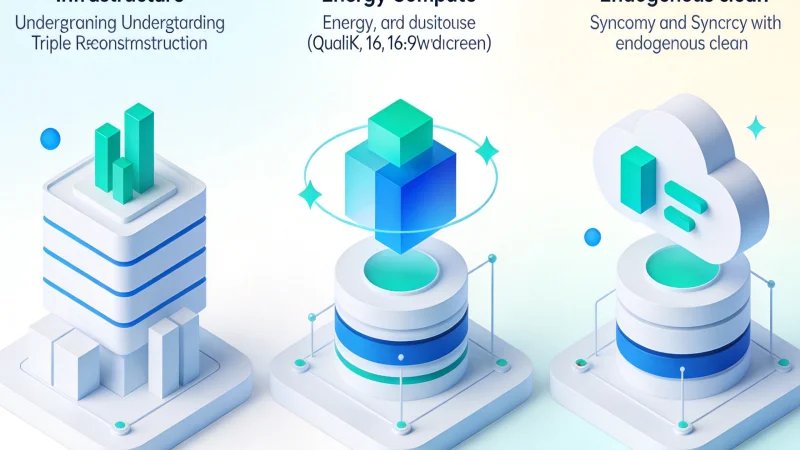
AI infrastructure is undergoing a triple reconstruction: energy-compute synergy, endogenous security architecture, and workload-aware networking. Competition has shifted from compute stacking to full-stack platform definition and ecosystem lock-in.

RSAC 2026 Deep Dive: The Security Industry Enters the AI-Native Security Era

RSAC 2026 Deep Dive: The Security Industry Enters the AI-Native Security Era

RSAC 2026 signals security’s shift from AI-assisted to AI-native, pivoting to governing AI behavior. AI becomes a new attack surface, and AI Agents join users, devices, and applications as the fourth entity. Market competition is shifting from point products to integrated platforms. Leading vendors are building unified control planes. The three-year roadmap: AI-enabled → AI application → AI agent → autonomous security. The core battleground is controlling AI traffic and behavior. Agent Security will emerge as a critical new category.

Analysis of Campus Network Security Architecture Evolution in the Agent Era

Analysis of Campus Network Security Architecture Evolution in the Agent Era

This report analyzes campus network security’s shift in the AI agent era. Networks are evolving from “access networks” to “Agent Runtime Networks,” entering an Agent-Native phase. It proposes a three-tier model: Access Edge (agent identity), Network Edge (communication control), and Service Edge (task governance). The strategic conclusion: campus security is moving from access control to behavior control, re-establishing the campus network as the core of enterprise security infrastructure.

Cisco Launches Zero Trust Security Architecture for AI Agents

Cisco Launches Zero Trust Security Architecture for AI Agents

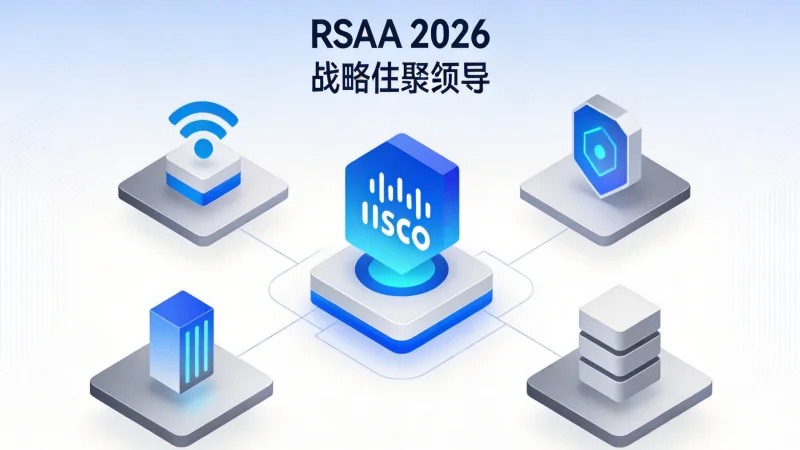
At RSA 2026, Cisco took a strategic lead by unveiling a Zero Trust architecture for AI Agents, with its core strategy centered on defining AI Agents as a new security principal governed alongside human employees—securing a pivotal position in enterprise security infrastructure for the AI era. The solution systematically addresses critical challenges—asset invisibility, lack of identity, and runtime security—through innovations including Agent IAM, task-level Zero Trust, Agent traffic governance, and Agentic SOC. This launch marks Cisco’s strategic shift from a user-centric to an agent-centric security paradigm.

The Future of Enterprise Networks in the AI Era

The Future of Enterprise Networks in the AI Era

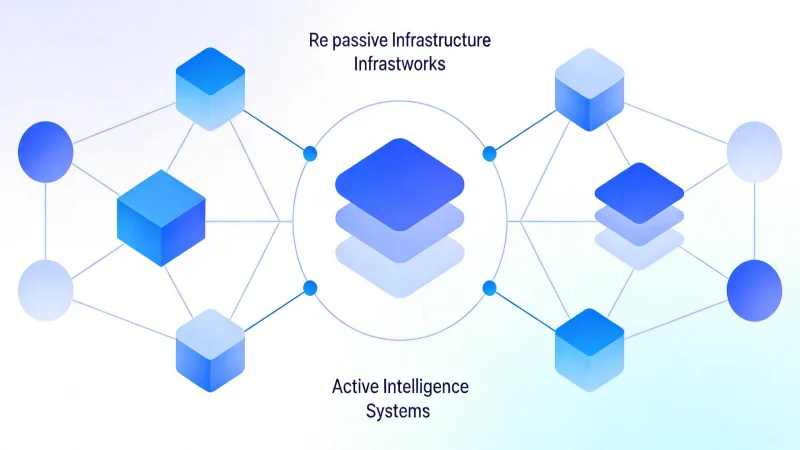
AI is transforming enterprise networks from passive infrastructure into active, intelligent platforms. This shift rests on three pillars: embedding AI into network operations, the rise of autonomous agents as primary network citizens, and a complete rethinking of security. Future networks must be intent-driven, programmable, observability-native, distributed, and sustainable. Organizations that treat the network as a strategic asset—not mere plumbing—will gain a decisive advantage in the AI era.