
Intelligence Date: April 3, 2026
Signal Strength: 🔴 Structural Change
Confidence Level: High
Time Horizon: 2026-2030
SITUATION
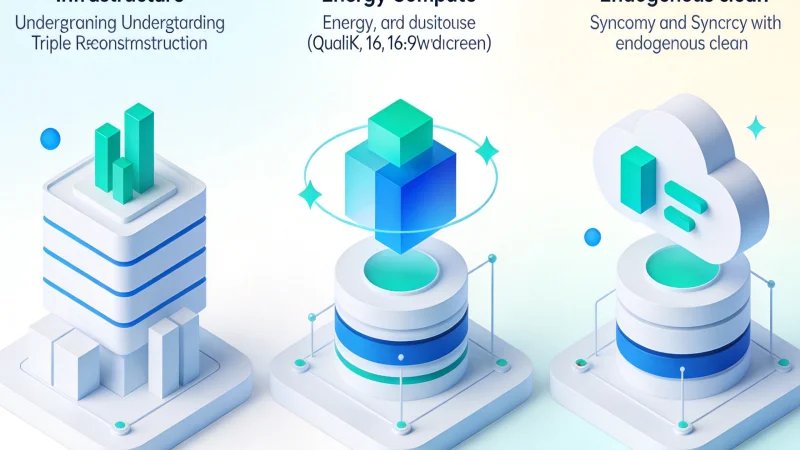
AI infrastructure is undergoing a triple reconstruction: energy-compute synergy, endogenous security architecture, and workload-aware networking. Competition has shifted from compute stacking to full-stack platform definition and ecosystem lock-in.
Key Evidence:
| Dimension | Signals (Cross-Week Validated) |
|---|---|
| Energy-Compute | NVIDIA's "AI factory as grid asset" moves from theory to deployment; liquid cooling penetration exceeds expectations |
| Security Architecture | Cisco DefenseClaw 4-layer framework, Palo Alto AIRS, Fortinet SASE embedded AI — security shifts from "bolt-on" to "built-in" |
| Networking | Cisco unified AI network (training/inference separation), AI-RAN moves from concept to practice |
| Ecosystem Strategy | NVIDIA open model alliance, OpenShell/Dynamo open source — "core open + upper layer lock" strategy |
Why it Matters
Game-Changing Shifts:
- Competitive Unit: From product performance → full-stack platform + ecosystem lock-in capability
- Decision Authority: From CISO/network manager independent procurement → CTO/CIO architecture committee unified planning
- Differentiation Source: From hardware benchmarks → software definition + energy synergy + commercial flexibility
Cost of Inaction
| Stakeholder | Consequence |
|---|---|
| Chip Vendors | Marginalized as pure hardware suppliers, margins eroded by software layer (-15%) |
| Security Vendors | Traditional perimeter defense obsolete, lose entry ticket to AI-native security market |
| Network Vendors | Networks become dumb pipes, value absorbed by compute/security layers, revenue stagnation |
| Cloud/IDC | Fail to meet high-density power and green compliance, customers flee to liquid-cooled facilities |
| Enterprise Customers | AI deployment costs spiral, security breaches cause model leakage or poisoning, project failure |
| Investors | Miss systemic opportunities, continue investing in single-link companies facing 30% valuation discount |
DECISION
Vendor Positioning:
| Vendor Type | Strategic Choice | Time Window |
|---|---|---|
| Chip/Compute | Build full-stack software + bind energy partners | 12 months |
| Security | Embed AI threat detection and model security natively into dev and inference pipelines | 18 months |
| Network | Develop AI workload-aware and dynamic scheduling networks, deeply integrate with compute platforms | 12 months |
| Cloud/IDC | Invest in liquid cooling and green energy, launch "compute + energy" subscription bundles | 18 months |
| Enterprise Software | Reconstruct AI capabilities as pluggable microservices with endogenous security | 24 months |
Enterprise Actions:
- Immediate (0-6m): Form cross-functional AI infrastructure evaluation team (IT + Facilities + Security)
- Immediate (0-6m): Mandate full-stack TCO and security architecture disclosure in all POCs
- Medium-term (6-18m): Pilot liquid cooling or high-density racks, evaluate green energy procurement
- Medium-term (6-18m): Launch AI-native security architecture design, integrate model security into DevSecOps
Investor Reassessment:
- Investment logic: From "single-point breakthrough" → "system integration" (+30% valuation premium)
- Investment logic: From "general-purpose cloud" → "vertical AI cloud/intelligent computing center" (+25% growth expectation)
- Investment logic: From "traditional cybersecurity" → "AI-native security" (+50% market space revaluation)
PREDICT
Most Likely Scenario (60% probability):
Within 24 months, a new standard emerges: green intelligent computing center + AI-native secure network + full-stack optimized chip.
Milestones:
- 12 months: Major cloud providers launch AI energy efficiency labeling
- 18 months: First major AI model supply chain attack triggers mandatory compliance
- 24 months: Ecosystem lock-in solidifies, heterogeneous integration costs rise 25-35%
Alternative Scenario (25% probability):
If AI compute demand growth falls below 30% annually, reconstruction slows. Differentiation path: Energy and security investments delayed, industry focuses on cost optimization of existing architecture, network-compute decoupling trend reverses.
Correction Triggers:
| Indicator | Baseline → Threshold | If Not Met |
|---|---|---|
| AI chip energy efficiency annual improvement | 2x/year → 1.5x/year | Prioritize software optimization investment |
| Enterprise AI project security budget share | 5% → 15% | Downgrade endogenous security demand forecast |
| Liquid cooling penetration in new large data centers | 30% → 50% | Energy constraints weaker than expected, delay infrastructure refresh |
Get 3-5 key AI infrastructure signals weekly →
💬 Comments (0)