
Weekly Industry Insight (Apr 20 - Apr 26, 2026) AI Generated
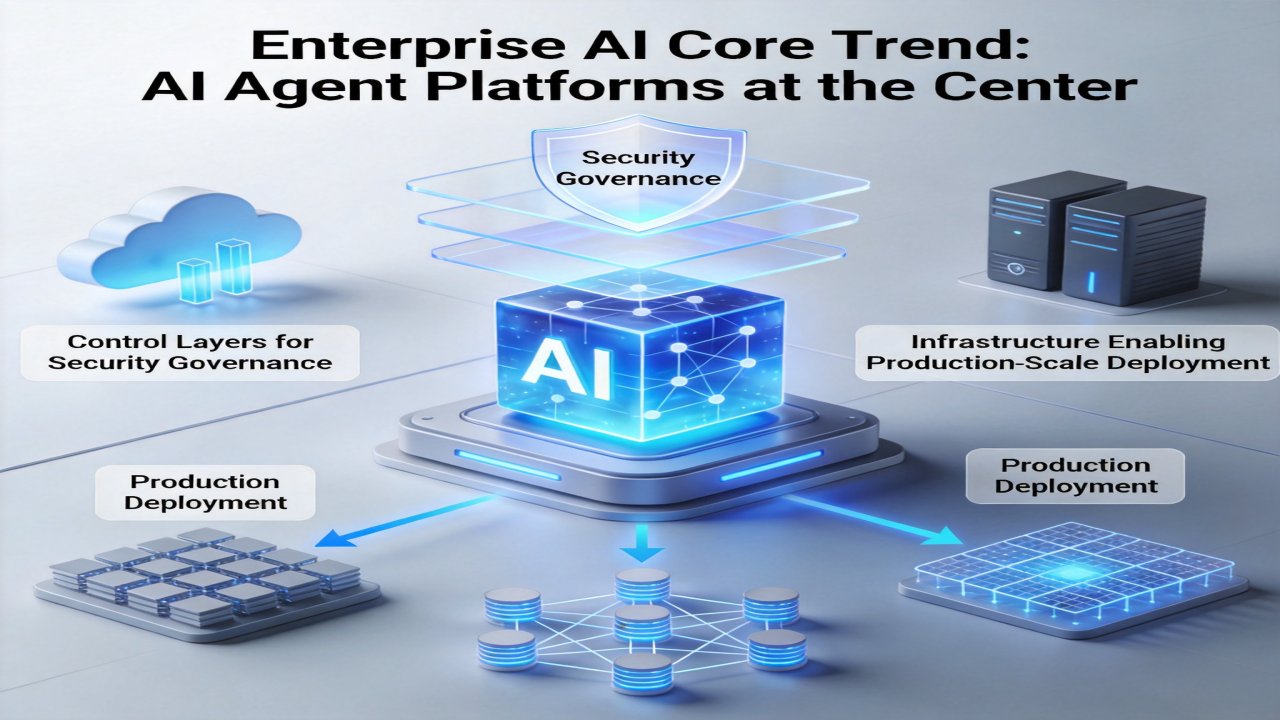
This week's signals indicate enterprise AI is moving from 'agent experimentation' to 'agent-scale deployment', driving a fundamental infrastructure, security and platform strategy retooling around new 'control layers' for runtime, orchestration, governance and energy.
Strategic Insights
1. The 'Control Layer Shift War' in Enterprise AI: From Models to Runtime Paradigms
2. Vertical AI: The Critical Step from 'Use Case Validation' to 'Infrastructure Fusion'
PRO Decision Signal
For Vendors
Quickly define and invest in your positioning within the 'new control layers' for AI agents or AI-enabled infrastructure (e.g., secure runtime, dev-toolchain security, network-energy coordination, vertical fusion platforms). Avoid being stuck at providing generic compute or model APIs; build moats by defining standards and deep ecosystem partnerships. Monitor areas being standardized by giants like Cisco, Microsoft, Google for differentiation or complementary opportunities.
For Enterprises
When evaluating AI platforms and solutions, 'control layer' capabilities and long-term strategy must be core considerations. Focus on vendors' security architecture across the AI agent lifecycle, consistent management in multi-cloud/hybrid environments, and integration depth with existing business systems and vertical frameworks. Prioritize partners with a clear 'AI operationalization' framework and control layer roadmap to reduce future technical debt and switching costs. Also, start planning for the energy and infrastructure synergy challenges posed by AI scaling.
For Investors
Focus on companies occupying key ecosystem positions in defining new enterprise AI 'control planes' or 'operational paradigms'. Investment themes expand from 'AI compute' and 'large models' to 'AI security & governance', 'AI agent runtime infrastructure', 'vertical AI fusion platforms', and 'energy-aware AI infrastructure software'. Be cautious of startups offering only generic AI tools without control layer advantages. Favor established vendors capable of transforming traditional infrastructure strengths (e.g., networking, security) into new control points in the AI era.