
Weekly Industry Insight (Mar 30 - Apr 5, 2026)
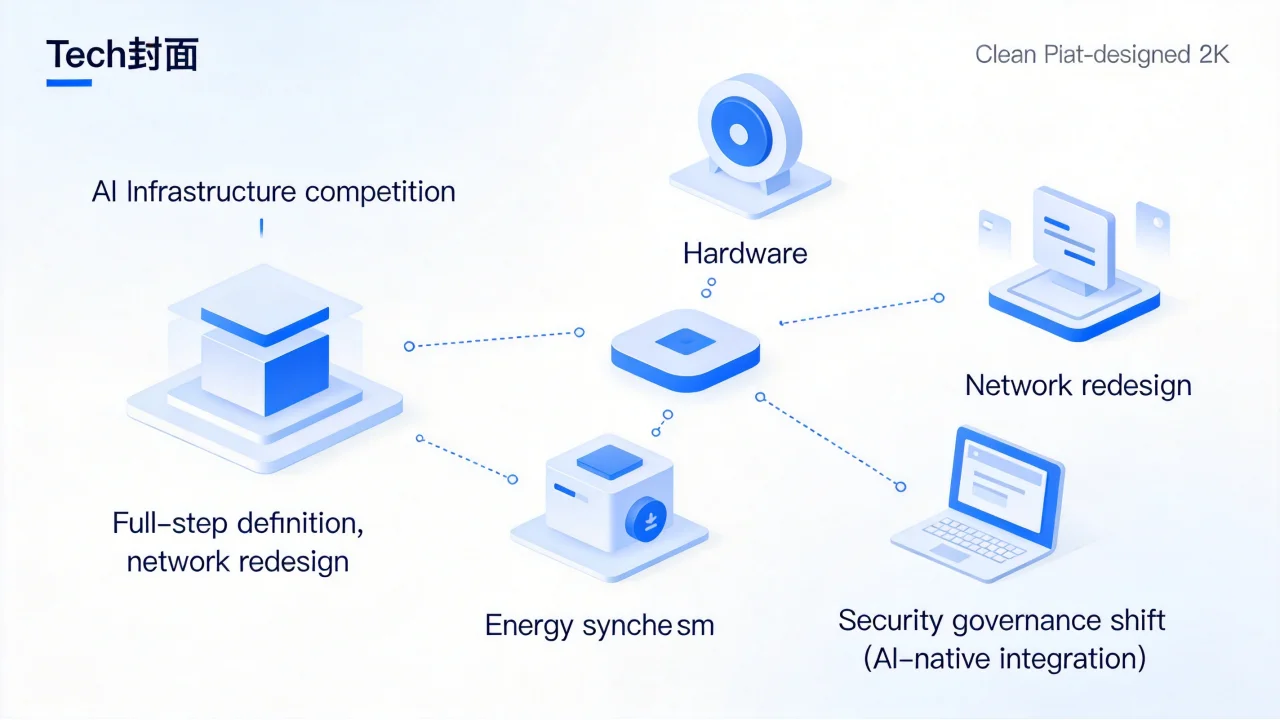
This week, AI infrastructure competition expanded from hardware to full-stack definition, network redesign, and energy synergy, while security governance shifted from add-ons to AI-native integration, signaling deep stack convergence and paradigm shifts.
Strategic Insights
1. AI Infrastructure Competition Enters 'Full-Stack Definition' Phase
2. AI Security Governance: Shifting from 'Add-On' to 'Native Built-In'
3. Network Architecture Undergoing 'Paradigm Redesign' Around AI Workloads
PRO Decision Signal
For Vendors
Build full-stack competitiveness in 'technology + commerce + ecosystem'. Technologically, innovate and integrate deeply across AI compute, networking, security, and energy synergy layers. Commercially, emulate models like Cisco's EA extension to Nutanix, making procurement flexibility a product feature. Ecologically, penetrate vertical industries through strategic partnerships (e.g., AWS & TGS/Flagship) to offer end-to-end solutions.
For Enterprises
Re-evaluate infrastructure selection and architecture logic with AI workloads as the core. Assess the critical impact of networking (especially wireless) on AI performance. Prioritize vendors offering native AI security governance frameworks by front-loading security and compliance requirements. Treat commercial model flexibility (e.g., on-demand scaling, unified agreements) as an architectural decision factor equal to technical specs.
For Investors
Focus on vendors defining new layers or achieving critical integration within the AI full-stack value chain. Key areas include: leaders in 'connectivity layer' solutions like unified AI networking and wireless AI infrastructure; players standardizing AI security governance frameworks and tools; and platform companies deeply integrating AI infrastructure with vertical industries (e.g., energy, manufacturing) to create synergies.