
Background and Overview
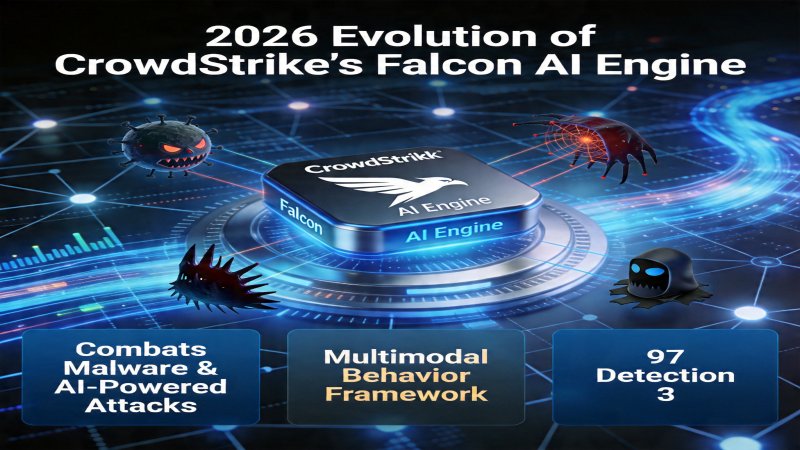
On April 2, 2026, CrowdStrike's latest whitepaper disclosed that, based on its global sensor network monitoring, up to 82% of new attacks are malware-less types, while the number of AI-empowered attackers increased by 89% year-on-year. This data aligns with recent trend assessments from third-party organizations like Gartner regarding "malware-less attacks becoming mainstream," signaling a fundamental shift in the threat landscape and posing a risk of obsolescence for traditional signature-based defense systems.Facing the new threat paradigm dominated by malware-less and AI-empowered attacks, the core evolution goal of the CrowdStrike Falcon AI engine is clear: compress the attacker's 'Breakout Time'. Its latest version, by integrating the "Agentic MDR" architecture with advanced AI detection technologies, compresses the average breakout time to 29 minutes and improves the detection accuracy for malware-less attacks to 97%.
Core Concept Definitions:
- Malware-less Attack: Attacks that do not rely on traditional malware files but utilize legitimate tools, scripts, in-memory attacks, or abuse system functions, making them difficult to detect by traditional signatures.
- Agentic MDR: A Managed Detection and Response architecture that deeply integrates AI-driven automated threat detection, investigation, and response capabilities into endpoint agents, aiming for ultra-fast containment of attack spread.
Architecture Layering
The CrowdStrike Falcon AI 2026 edition engine adopts a three-layer architecture design, achieving a closed loop from data collection to automated response.Core Architectural Evolution lies in decoupling heavy AI detection analysis from lightweight endpoint sensors, while deeply embedding automated response logic (playbook executors) into endpoints, forming a defense system that combines cloud-based intelligent judgment with edge-side agile execution.
Key Technologies
1. Multimodal Behavior Feature Extraction Framework
- Problem Solved: Malware-less attack behaviors are fragmented and highly covert, making detection ineffective when relying on a single data source (e.g., file hash) or a single behavior sequence.
- Core Principle: This framework concurrently collects multi-dimensional data such as process tree creation relationships, memory operation patterns, anomalous network connections (e.g., C2 communication to suspicious geolocations), file system activities (e.g., sensitive registry key modifications), and identity authentication events. Through time-window alignment and correlation analysis, discrete low-level system events are fused into high-dimensional behavioral profiles describing high-level tactical intent (e.g., "credential theft," "lateral movement").
- Lightweight Implementation: According to its published architecture paper, to balance detection accuracy and endpoint performance, the framework employs efficient feature selection algorithms and model quantization techniques. Feature selection focuses on behavioral indicators with the highest information gain, while quantization converts deep learning models from high-precision floating-point numbers to low-bit integers, significantly reducing computational and storage overhead while maintaining model effectiveness. This is one of the core technical supports for its claimed "35% reduction in endpoint resource consumption."
- Measured Effect: Detection models built on this framework achieve 97% accuracy for malware-less attacks (Source: CrowdStrike Falcon AI 2026 Evolution Whitepaper). Its lightweight design reduces endpoint resource consumption by 35% compared to the previous generation (Source: Falcon AI Fileless Attack Detection Architecture Paper).
2. Few-Shot Learning Module
- Problem Solved: AI-empowered attacks can rapidly generate variants, causing traditional machine learning models to quickly become outdated due to insufficient training samples, making it difficult to identify unknown or novel attacks.
- Core Principle: This module utilizes meta-learning or metric learning techniques, enabling the model to learn "how to learn" from a vast amount of known attack patterns (prior knowledge). When a novel attack appears, the model can rapidly adjust its internal parameters or generate new detection rules with very few (even single-digit) samples, achieving identification of unknown threats.
- Measured Effect & Limitations: This module achieves 91% accuracy in identifying unknown AI-empowered attacks (Source: Falcon AI Fileless Attack Detection Architecture Paper). However, its limitations include: 1) Adversarial Attack Risk: Adversarial samples specifically designed to bypass the few-shot learning decision boundary may render it ineffective. 2) "Zero-Day" Response Delay: For completely novel "zero-day AI attacks" with no prior knowledge association, the model still relies on the process of sample capture, cloud analysis, and global deployment. According to industry practice, end-to-end update latency can range from several hours to a day, creating a defense gap during this period.
3. Malware-less Attack Detection Technology
- Problem Solved: Addressing the mainstream attack form comprising up to 82% of attacks, which completely bypass traditional antivirus file scanning.
- Core Principle: The focus shifts from "is the file malicious?" to "is the behavioral intent malicious?". The engine concentrates on detecting key tactical stages in the attack chain, such as: executing malicious commands using legitimate system tools (e.g., PowerShell, WMI), directly injecting and executing malicious code in memory (fileless attacks), stealing credentials from memory (e.g., Mimikatz-type attacks), and establishing covert lateral movement channels.
- Measured Effect: This technology is the cornerstone supporting the 97% high detection accuracy. According to a CrowdStrike blog from March 2026, it claims a detection rate 12 percentage points higher than comparable solutions from Palo Alto Networks and Cisco for such attacks. (This is a vendor-specific claim and should be viewed with caution. Currently, independent third-party evaluators like the MITRE Engenuity ATT&CK® Evaluation primarily assess technical coverage rather than direct detection rates, and have not yet provided quantitative data that can directly verify this 12-point advantage. Customers should validate this metric themselves during PoC.)
4. Agentic MDR Defense Architecture
- Problem Solved: The delay from Security Operations Center (SOC) alerting to manual intervention response is a critical window for attackers to move laterally and escalate damage.
- Core Principle: Transforms the MDR (Managed Detection and Response) logic traditionally executed by security experts in the cloud SOC into automated "response playbooks" and embeds key decision-making and execution capabilities into the endpoint agent. When the local AI engine or cloud determines a high-confidence threat, the endpoint-side response executor can automatically trigger investigation, correlate affected assets and user identities, and execute actions like isolating processes, blocking network connections, and repairing configurations based on the playbook, without waiting for cloud instructions.
- Measured Effect: This architecture compresses the average attack breakout time to 29 minutes and can automatically handle 92% of common attack patterns (Source: CrowdStrike Falcon AI 2026 Evolution Whitepaper and AI Defense AI Best Practices Blog).
Principle Workflow
A complete threat detection and response workflow is shown below, demonstrating the automated closed loop of data flow and decision flow.Competitive Landscape Analysis
The competitive focus in the current endpoint security market has shifted from basic protection to detection accuracy and response speed against new threats. A comparison of key competitors' technical approaches is as follows:| Dimension | CrowdStrike Falcon AI | Palo Alto Networks (Cortex XDR) | Cisco (Secure Endpoint) |
|---|---|---|---|
| Core Technical Approach | Focuses on endpoint-centric multimodal behavior AI & Agentic MDR architecture | Cross-domain correlation analysis based on firewall, cloud security, and XDR platform | Integrates Talos threat intelligence, emphasizes synergy with network infrastructure |
| Key Advantages | 1. Claims leading data on malware-less attack detection accuracy 2. Agentic MDR achieves 29-minute breakout time 3. Possesses a public library of AI offensive/defensive real-world cases | 1. Strong network & cloud environment data integration capabilities 2. Unified SOC platform experience | 1. Extensive global threat intelligence network (Talos) 2. Natural integration advantages with network devices |
| Potential Weaknesses | 1. Solution tightly coupled with its own agent, may increase integration complexity in heterogeneous environments 2. Decision transparency and explainability of automated responses need continuous optimization | 1. Detection Coverage Gaps: In the MITRE Engenuity ATT&CK® Evaluation 2024 results, there were blind spots or reliance on indirect signals for detecting some fileless attack techniques (e.g., T1055 Process Injection). 2. Automated response depth depends on platform integration, potentially higher latency | 1. Response Speed Shortcoming: On the Gartner Peer Insights platform, "slow response" is one of the common negative feedback points for Secure Endpoint. 2. The evolution pace of the native AI detection engine is relatively steady, with fewer public AI adversarial cases |
- Claimed Detection Accuracy Advantage: In the core battlefield of malware-less attacks, it claims a detection rate 12 percentage points higher than Palo Alto and Cisco, though independent verification is needed.
- Response Architecture Innovation: Pioneered the productization of the "Agentic MDR" concept, embedding response capabilities into endpoints, breaking the speed bottleneck of cloud-centric response.
- AI Offensive/Defensive Practice Foresight: By publishing 12 real-world cases and standardized processes, it systematically demonstrates early-stage validation capabilities for "AI defending against AI," establishing a technical brand barrier.
Key Judgments
| Key Judgment | Importance | Action Recommendation | Confidence Level |
|---|---|---|---|
| The competitive core of threat detection has fully shifted from 'signature coverage' to a race in 'behavioral intent identification' and 'response speed.' CrowdStrike has established current data advantages (97% detection rate, 29-minute breakout time) in these two dimensions through multimodal behavior AI and Agentic MDR. | This is becoming a key technical dimension for evaluating next-generation endpoint security products. However, a vendor's market position is also influenced by multiple factors such as product integration, total cost of ownership, and customer relationships; technological leadership is not the sole determinant of market share shifts. | 1. Enterprise customers should use malware-less attack detection rate, automated response coverage, and average breakout time as core PoC metrics during selection. 2. Security vendors need to increase investment in behavior analysis AI and endpoint-side automated orchestration technologies. | High |
| 'AI defending against AI' has entered the early-stage validation phase among leading technology vendors. CrowdStrike's real-world cases indicate that using technologies like few-shot learning to counter AI-empowered attacks is a viable direction, but large-scale deployment still faces challenges like model explainability and adversarial sample attacks. | This marks the acceleration of security offense/defense into the 'algorithmic confrontation' era. Defenders must systematically explore integrating AI technologies into the entire defense chain. | 1. Enterprise security teams need to start building specialized threat hunting awareness and preliminary exercise mechanisms for AI attacks. 2. Security vendors should provide more AI offensive/defensive simulation tools and case libraries, strengthening market education and technical transparency. | Medium |
Open Research Questions
- Transparency and Risk Control of Automated Decisions: What is the transparency and explainability of the decision logic within the automated response playbooks in the 'Agentic MDR' architecture? In complex heterogeneous enterprise environments, false positives leading to automated actions could cause business disruption. What granular policy configuration, approval workflows, or rollback mechanisms does CrowdStrike provide for control?
- Objectivity Verification of Competitive Data: The comparative data with Palo Alto and Cisco (e.g., 12 percentage points higher detection rate) originates from CrowdStrike's own testing. Do the latest results from independent third-party evaluators (e.g., MITRE Engenuity ATT&CK® Evaluation) support this advantage? Cross-validation is needed.
- Practical Boundaries and Timeliness of Few-Shot Learning: What is the practical effect of the few-shot learning module against completely unknown "zero-day AI attacks" with no prior knowledge association? What is the end-to-end delay from sample acquisition, model training/update, to deployment across the global endpoint network? This determines the final time window for responding to novel attacks.
- Ecosystem Integration and Openness: CrowdStrike's Agentic MDR architecture is deeply dependent on its proprietary agent. In hybrid multi-cloud enterprise environments with numerous third-party security tools, how does this architecture achieve deep, low-latency integration and collaboration with external SIEM and SOAR platforms?
Why it Matters
Positioning: Incremental
Key Factor: Competitive Barrier: CrowdStrike's claimed technical advantages (e.g., 97% malware-free attack detection rate, 29-minute average breakout time) form its core competitive barrier. However, the strength of this barrier is highly dependent on data objectivity, as its key performance indicators (e.g., the 12-percentage-point detection advantage) lack independent third-party validation. Additionally, potential weaknesses exist in the transparency of its Agentic MDR's automated decision-making and its integration capabilities in heterogeneous environments. This barrier is significant in marketing but uncertain in terms of actual technological moat depth.
Stage: Peak of Inflated Expectations
DECISION
For Vendor (Palo Alto Networks, Cisco)
- Immediately launch a specialized enhancement plan for fileless attack detection capabilities (e.g., T1055 process injection) and publish the test results.
- Accelerate the lightweight and edge deployment of automated response architecture to counter CrowdStrike's claimed challenges in response speed.
Strategic Moves: Use attack surface coverage completeness (e.g., MITRE evaluation results) as a core marketing point to counter competitors' detection rate claims.
- Treat CrowdStrike's claimed 97% detection rate and 29-minute breakout time as core validation items in PoC, ensuring independent testing.
- Focus on evaluating the decision transparency, false positive handling processes, and integration compatibility risks of Agentic MDR automated response in your complex IT environment.
Action Guidance: Follow
For Investor
- Monitor the consistency between CrowdStrike's claimed technical advantages and subsequent independent third-party evaluations (e.g., MITRE, NSS Labs).
- Investigate the scaling costs and actual customer adoption rates of its 'AI defends AI' technologies like few-shot learning.
Key Risk: If key performance data is disproven or fails to meet customer expectations, it will severely impact the technology leadership narrative supporting its high valuation.
PREDICT
6 months (High confidence)
Independent third-party security evaluation agencies will release more comparative reports focusing on the actual detection rate and response timeliness for malware-free attacks.
1 year (Medium confidence)
The endpoint security market will see increased competition around product features like 'automated response decision transparency' and 'AI explainability'.
2 years (High confidence)
Lightweight, autonomous endpoint response based on Agentic architecture will become a standard or entry-level requirement for mid-to-large enterprise endpoint security solutions.
Get 3-5 key AI infrastructure signals weekly →
💬 Comments (0)